

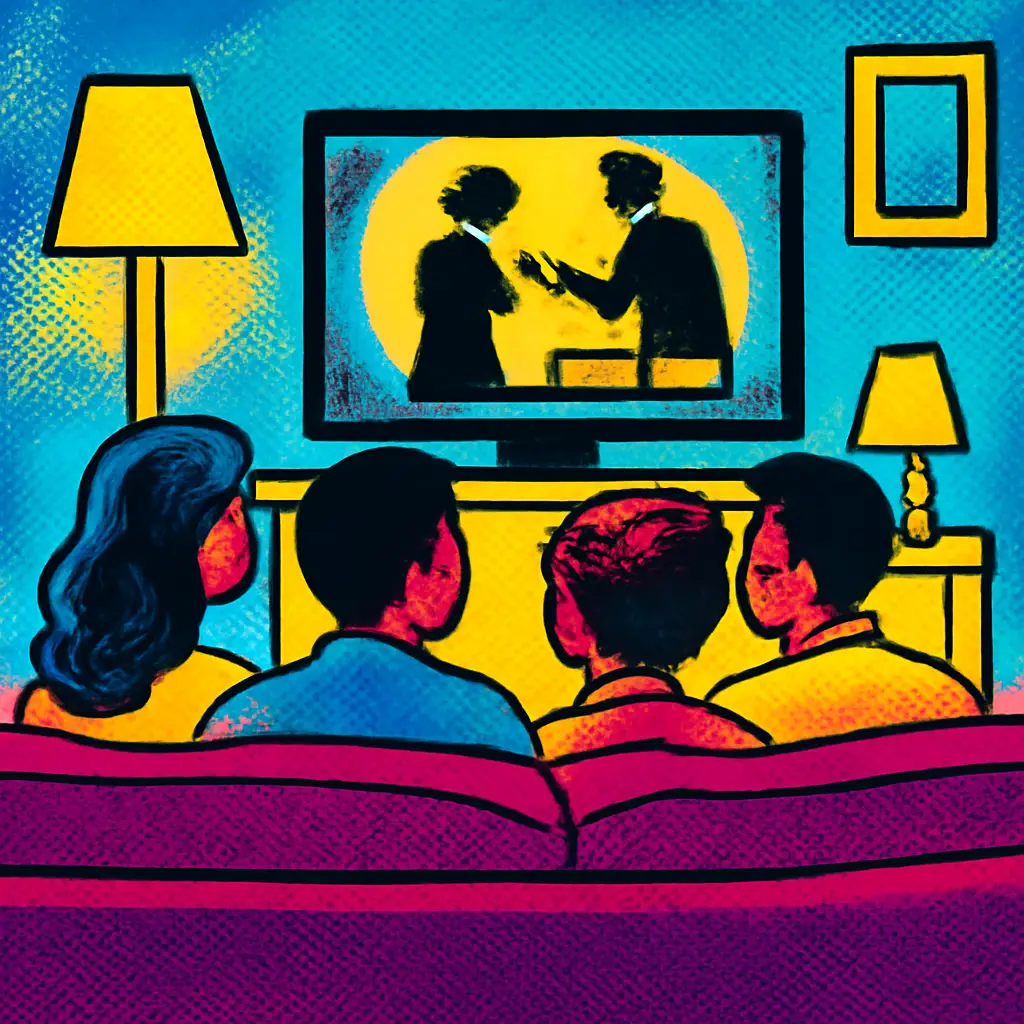
You finally press play, then spend the first 20 minutes rereading a message thread, thinking about tomorrow, and asking, “Wait, who is that?” The usual response is to blame the movie or demand more discipline from yourself. Neither helps much. A better approach is to treat the period between work and a movie as a real transition.
This does not mean turning a casual evening into a wellness project. It means giving your attention a chance to arrive before asking it to follow unfamiliar faces, a new setting, and a plot with consequences. With a small reset and a smarter choice of movie, a tired evening can still feel like watching rather than merely having something on.
Decide what job the movie needs to do tonight
“I want to watch a movie” can mean several different things. You may want company while you fold laundry, an easy laugh, an absorbing story, or a film you genuinely want to remember. Those are different assignments, and trouble starts when the assignment and the selection do not match.
Before browsing, name the evening’s actual need in one sentence:
- Background companionship: You want a pleasant presence and do not mind missing details.
- A gentle landing: You want to stop thinking about your day, but you still want to follow the story.
- Full attention: You have been saving a particular film and want the experience to count.
There is no shame in the first option. The useful distinction is honesty. Do not choose a demanding crime story, a fast dialogue comedy, or a long-awaited subtitled drama for an evening when you really need background companionship. Save it. Protecting a movie you care about from a half-watch is not being precious; it is good timing.
A movie is not wasted because you stop it early. It is more likely to be wasted when you keep playing it after you have stopped receiving it.
Make a short “closing shift” before you press play
When a workday has been busy, loose ends often keep resurfacing because they have nowhere else to go. The goal is not to solve them all. It is to put them in a container so they do not compete with the opening scene.
Try a five- to ten-minute closing shift. Keep it deliberately plain:
- Write down the next action for anything you are afraid of forgetting. “Reply to Jordan about the draft” is enough; do not begin composing the reply.
- Put away the work object most likely to pull you back in: laptop, notebook, badge, or charging phone. Physical distance matters because a visible task invitation is easy to accept.
- Do one small body-level transition: wash a mug, change clothes, make tea, or step onto a balcony or porch for a minute. Pick a repeatable action, not an elaborate ritual.
- Tell yourself when you will be available again: “I will look at that list tomorrow morning.” A specific return point is more reassuring than a vague promise to handle it later.
This works best when it stays short. A 40-minute attempt to “clear your mind” can become a second work session. You are only creating a border around the day.
Choose a movie with a low re-entry cost
After a demanding day, the ideal film is not necessarily cheerful or simple. It is a film you can re-enter if your mind drifts for a moment. Think of this as a low re-entry cost: you can look away to take a sip of water and still know where you are when you look back.
Often, that means choosing a movie with some of these qualities:
- A clear central character and a visible goal.
- Scenes that establish a place and relationship before introducing a complication.
- Dialogue you can hear comfortably without straining for every quiet line.
- A familiar genre or filmmaker whose rhythms you already understand.
- A runtime that leaves room for bedtime rather than turning the ending into a negotiation.
A film can be emotionally rich and still have a low re-entry cost. A character-driven comedy, a straightforward adventure, a classic you know broadly but have not memorized, or a contained mystery may work beautifully. Meanwhile, a movie with dense world-building, deliberately ambiguous chronology, many similar-looking characters, or rapid subtitles may be excellent but better saved for a fresher night.
Use your own “easy entry” shelf
Make a small watchlist before you need it. Give it a name such as “Tuesday brain” or “can follow after work.” Include films you are curious about but do not feel anxious to catch perfectly. The list prevents the familiar trap of browsing while tired, rejecting every option, and ending the evening with neither a movie nor rest.
Keep a second list for films that deserve your alert self. This is especially helpful when an acclaimed movie, a recommendation from a friend, or a personal favorite has acquired too much pressure. Putting it on a “weekend attention” list is not postponing enjoyment; it is reserving the right conditions for it.
Give the opening ten minutes a fair chance
The beginning of a movie asks for more attention than most of the rest. It introduces the visual world, names, tone, and the small details that later pay off. If you start while standing in the kitchen, answering messages, and adjusting the sound, you may make the entire film feel confusing.
Create one modest opening rule: sit down before pressing play, and leave the first ten minutes uninterrupted unless something genuinely needs you. You do not need to lock your phone in another room. Put it face down and out of arm’s reach, or place it on a charger across the room. The point is to add enough friction that checking it becomes a decision rather than a reflex.
If you watch with someone else, agree on the rule aloud. “Let’s give it ten minutes, then we can decide whether it is the right movie.” This is kinder than silently enduring a poor fit because you have already started.
Set up sound for comprehension, not spectacle
Tired attention is easily lost when dialogue is hard to make out. Before the movie begins, lower competing sounds: pause a noisy appliance if practical, close a door, or turn off an unrelated video playing nearby. Then set the volume at a level where ordinary conversation is understandable.
Captions can be useful if dialogue is being lost, especially when the issue is mixing, accents, or room noise rather than concentration. But captions also ask your eyes to work continuously. If reading makes you feel more alert in an unpleasant way or pulls your gaze away from the frame, try improving the room sound first. There is no universally superior setting; the right one is the one that lets you understand the film without effortful decoding.
A common mistake is repeatedly changing settings during the opening. Make one adjustment, then watch for a few minutes. Constant tinkering keeps the brain in problem-solving mode.
Use a planned pause instead of a guilty one
Many people resist pausing because it feels like failing at movie watching. Yet an intentional pause is very different from drifting through 45 minutes you cannot recall. Build one check-in around the halfway point, a natural scene break, or the moment you notice your attention has slipped twice.
Ask three quick questions:
- Do I know what is happening?
- Am I interested enough to continue?
- Am I tired, hungry, uncomfortable, or still preoccupied?
If the answer to the first two is yes, continue. If you are engaged but physically uncomfortable, fix the practical issue and return. If you cannot follow the plot and your mind keeps circling the day, choose one of two clean exits: stop and resume another time, or switch to a true background option.
Do not rewind automatically. Rewinding a few minutes helps when you missed one clear piece of information. It is less helpful when you have missed the emotional thread of several scenes. In that case, restarting on another evening may be more satisfying than trying to reconstruct the film from fragments.
Let the movie be lighter than your idea of “good taste”
A stressful day can create a peculiar kind of cultural guilt: you feel that limited free time must be spent on the most impressive possible film. That turns leisure into a performance review. An accessible movie is not automatically a lesser one, and a challenging movie is not automatically a more worthy choice.
Consider the tradeoff honestly. If you choose something undemanding and enjoy it, you have met the evening’s need. If you choose something ambitious, become distracted, and then criticize both yourself and the movie, no one wins. Taste includes knowing the conditions in which you are likely to appreciate something.
A realistic two-person reset
Imagine two people who both get home mentally crowded. One wants a serious drama they have been meaning to see; the other wants something familiar and funny. Instead of debating titles for half an hour, they can name the mismatch: one person wants a film to focus on, and the other wants a landing pad.
A workable compromise is not always “half of each.” They might take ten minutes to eat something and make a list for tomorrow, then try the drama with an agreement to stop after the opening section if it is not landing. Or they might choose the comedy tonight and set a specific next evening for the drama. The key is that the serious film does not become a test the second person is expected to pass.
Know when the right move is not a movie
Sometimes you want a movie because you want the day to be over, but another need is more immediate: food, sleep, a shower, quiet, or a brief conversation with someone at home. A movie cannot reliably substitute for those basics. Choosing not to watch is a valid conclusion, especially when you are already replaying scenes in your head before they have finished.
There will be another evening for the film. Ending the attempt early leaves you with a choice, not a feeling that entertainment somehow failed you.
Try this tonight
Before you browse, write down one unfinished task and put your phone on a charger away from the seat. Then choose between two options only: an easy-entry film for tonight or a saved film for a more attentive evening. Give whichever you choose ten undistracted minutes. That small structure is often enough to make the screen feel like a place you have actually arrived.








Ad