

You arrive at a hotel after a long travel day, each open a suitcase, and within 20 minutes the room has become impossible to use. One person’s charging cable crosses the bed, the other person’s skincare is balanced beside the sink, and nobody can tell which jacket is clean enough to wear again. The problem is not that either of you packed badly. A hotel room offers very few surfaces, and all of them invite temporary clutter.
A small room-sharing system prevents that drift. The goal is not to unpack as if you have moved in; it is to give every frequently used item a visible, limited home. That makes mornings calmer, keeps shared areas genuinely shared, and makes departure far less likely to involve a frantic search for an earbud case.
Start by treating the room as three kinds of space
Most hotel-room friction comes from mixing private items with communal ones. Before anyone unpacks, mentally divide the room into three categories: one personal zone for each traveler and one shared zone. This takes a minute and works whether you are sharing with a partner, a friend, a sibling, or a teenager.
| Zone | What goes there | What stays out |
|---|---|---|
| Personal zone | Clothes, daily medication, glasses, book, personal electronics | The other traveler’s belongings and room-wide paperwork |
| Shared zone | Room key backup, itinerary, one charging hub, snacks, water | Loose toiletries, worn clothing, individual cables |
| Exit zone | Items needed when leaving: shoes, outer layer, day bag | Everything that does not need to leave with you |
The exact furniture does not matter. One traveler might get the left nightstand and half a closet; the other gets the right nightstand and a dresser corner. In a room with one nightstand, use separate sides of the bed or designate a shelf, chair, or section of the luggage rack. What matters is that the division is obvious enough to maintain when you are tired.
Claim surfaces before objects claim them
Hotel rooms tend to have a few high-value surfaces: the nightstands, desk, luggage rack, bathroom counter, chair, and the small ledge near the door. If these are not assigned, they become a mixture of everybody’s things.
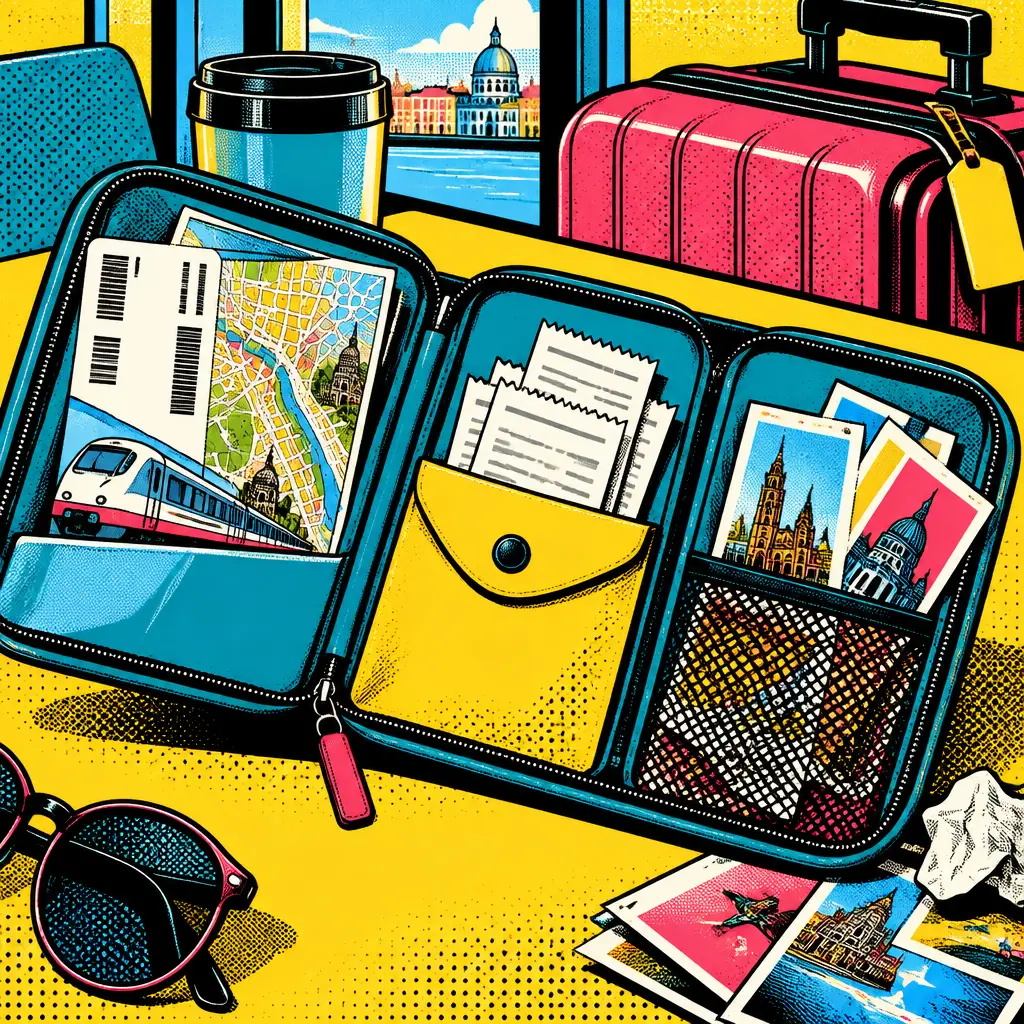
Do a quick room scan first. Notice which surface is most likely to be needed during the trip. If one person works remotely, the desk may be their personal zone. If neither of you needs it for work, it can become the shared planning surface. Keep it almost empty: perhaps a paper map, tickets, or a single pouch holding the items both people will reach for.
Use the luggage rack as a boundary, not a dumping ground
A luggage rack is especially useful because it gives a suitcase a stable, contained address. If there are two racks, each person gets one. If there is only one, reserve it for the suitcase that will be opened most often, and place the other suitcase closed and upright in a low-traffic spot. Avoid laying both cases open on the floor. An open suitcase quietly turns into a second closet, laundry basket, and lost-property zone.
For a stay of a few nights, leave less-used clothing in packing cubes inside the suitcase. Take out only the next day’s outfit, sleepwear, and one layer for changing temperatures. The less clothing that escapes the bag, the less sorting you have to do later.
Create a bathroom split that respects the counter
The bathroom counter is usually the first shared space to fail. It is small, wet, and used at the same predictable times each day. A row of individual bottles may look orderly at check-in but soon blocks the sink and makes cleanup harder.
Give each traveler one toiletry pouch or one clearly defined section of the counter. Keep the pouch standing open only while getting ready; when finished, zip it and return it to a shelf, a suitcase, or a designated corner outside the splash zone. This is faster than arranging every item neatly, and it keeps a single dropped bottle from spreading a whole routine across the room.
- Keep only the items being used right now beside the sink.
- Put shared basics, such as toothpaste if you both use it, in the middle or in a small shared pouch.
- Move makeup, razors, hair tools, and personal grooming items back to individual storage after use.
- Use the supplied towel areas intentionally, or agree which towel belongs to whom before the first shower.
If the bathroom has almost no counter, do not try to force a countertop system. Use a closed toiletry bag as a portable station: take it in, use it, and take it out. In a tiny room, portability is often more useful than storage.
A shared room feels more spacious when its surfaces have jobs. The aim is not perfect tidiness; it is making the next needed thing easy to find without negotiating around someone else’s things.
Make charging visible and limited
Charging gear is easy to lose because it is often hidden behind a bed or desk at the very moment you are trying to leave. It also multiplies quickly: phones, watches, e-readers, headphones, cameras, and power banks can produce a nest of nearly identical cords.
Choose one charging location with an outlet you can reach without moving furniture. Put a small pouch, tray, or even the lid of a packing cube there to define the area. Each person’s device can charge there, but unused cords should return to the owner’s bag rather than live permanently on the floor.
If you share one power strip or multi-port charger, decide one simple rule: fully charged items leave the station. This prevents the shared outlet from becoming storage for devices nobody is using. Before bed, check that cables are not stretched across a walking route and that electronics are resting on a stable, dry surface.
Give worn-but-wearable clothes their own answer
The chair in a hotel room is rarely a chair for long. It becomes the place for jeans worn once, a sweater removed at dinner, and tomorrow’s jacket. When two people use it, the distinction between “wear again,” “clean,” and “laundry” disappears.
Set up a temporary three-way decision instead:
- Clean: folded or hung with unworn clothes.
- Wear again: one designated hook, suitcase handle, or side of the luggage rack.
- Ready to wash: a separate laundry bag or a sealed section of the suitcase.
This does not require buying travel organizers. A spare packing cube can hold laundry, while a single hanger can hold an outfit that will be worn again. The important part is not putting wearable clothes back among clean clothes just because there is nowhere else to put them.
Be realistic about the room’s limits. If there is no spare hook or chair, fold the wear-again outfit and place it on top of one person’s closed suitcase. A contained stack is better than a visually impressive arrangement that cannot survive a rushed morning.
Use an exit zone to make departure less error-prone
Items vanish at checkout because they get used in unusual places: a charger by the bed, sunglasses on a windowsill, a jacket over a chair. An exit zone gathers the things that must travel with you again.
Place day bags, shoes, outerwear, and anything needed for the next outing near the door, without blocking it. When you return to the room, put these items back in the same area. The habit creates a useful visual signal: if an essential item is elsewhere, it is probably there for a reason and needs to be retrieved.
Do a two-person final sweep
At checkout, do not both scan the room randomly. Divide the task. One person checks high and soft places: closets, hooks, curtains, bedding, and bathroom shelves. The other checks low and hard-to-see places: outlets, under the bed, behind the desk, the safe if used, and the luggage rack.
Then each person checks their own personal zone. This division works because it reduces duplicate checking and catches the places where small belongings tend to hide. Pack chargers only after they have been unplugged and counted.
A realistic setup for a weekend stay
Imagine two friends sharing a standard room for two nights. One person uses the left bedside surface for glasses, a book, and their phone; the other uses the right side of the bed and a dresser corner for the same kind of items. Their suitcases stay closed on separate sides of the room, with one packing cube removed for next-day clothes. A small pouch on the desk holds the room key backup, transit cards, and a shared charging adapter. In the bathroom, each person takes their own toiletry bag in only when getting ready.
Nothing in this setup is elaborate. But at the end of the night, there is no question about whose cable is whose, where a clean shirt is, or whether the desk is available to check tomorrow’s plan. The room remains a place to rest rather than a staging area for two competing households.
Adjust the system instead of policing it
A room plan should lower tension, not create new rules to enforce. If one traveler prefers to live from a suitcase and the other likes to unpack, that is fine. Give the unpacker the drawer or closet section and let the suitcase user keep their belongings contained. If one person is an early riser, place their next-day clothes and morning essentials in the exit zone the night before so they do not need to search through shared areas.
The common mistake is assuming every item deserves a surface. In a small room, surfaces are for items in active use; everything else needs to be inside a bag, drawer, or suitcase. That one principle keeps the system workable even when the room is smaller than expected.
Try this on your next trip: before opening either suitcase, assign one personal surface each, one shared surface, and one spot by the door. It takes less time than locating a missing charger on checkout morning.








Ad