

The familiar small-kitchen dinner-party failure starts about 20 minutes before guests arrive: a cutting board is balanced over the sink, a bottle is blocking the only clear patch of counter, and the dish that needs one last stir has nowhere to land. The problem is not that a compact kitchen cannot feed people. It is that the counter has quietly been assigned five jobs at once.
A better plan is to protect one usable work surface and make the meal do more of its work before anyone rings the bell. This does not mean serving an apologetic “simple” dinner. It means choosing food and a setup that do not demand constant finishing, transferring, and rearranging in a room with no spare runway.
A small kitchen feels generous when the host has somewhere to put the next thing down.
Design the evening around a counter, not a recipe fantasy
Before deciding what to cook, identify your protected counter: the section you will keep clear from the final hour of prep through serving. It might be beside the stove, the stretch between sink and refrigerator, or even a small rolling cart used only for plating.
This space needs to handle the actions that cannot happen elsewhere: slicing the last garnish, opening a hot pot, pouring a dressing, or setting down a serving utensil. Everything else should have a different home.
- The table becomes the drinks and snack area before dinner, then the serving or eating area.
- The oven or microwave can hold clean plates or a covered finished dish only when they are off and cool; do not use either as a vague storage bin while cooking.
- A tray becomes a movable station for glasses, condiments, or dessert dishes.
- The sink stays available for washing hands and quick rinsing rather than collecting every used tool.
The goal is not an empty-looking kitchen. It is a kitchen where every object has a temporary destination that is not the one surface you need most.
Choose food with a low “last-minute footprint”
Some meals are delicious but structurally demanding. Tacos with many toppings, individual bowls assembled to order, fried food, and recipes that require several pans to finish at the same moment can turn a small kitchen into a traffic jam. They ask for bowls, lids, spoons, hot handles, and guests’ attention all at once.
For this kind of gathering, favor a menu with three properties:
- One main vessel. A baked pasta, braise, bean-and-vegetable stew, sheet-pan meal, or composed grain salad can be served from the pot, baking dish, or platter in which it rests.
- One fresh element. A simple salad, cut fruit, or crunchy vegetable side makes the meal feel lively without creating a second cooking project.
- One ready dessert. Choose something that can be sliced, spooned, or set out without a final cooking step, such as fruit with cookies, a purchased cake, or a make-ahead pudding.
“Make-ahead” does not have to mean cooking everything the day before. It can mean washing greens, mixing a vinaigrette in a jar, grating cheese, setting the table, or placing serving utensils in their dishes earlier in the day. Each completed decision is one less item competing for the counter later.
Use vessel-to-table cooking where it actually helps
A pot or baking dish that goes directly to the table eliminates a transfer, and transfers create spills, extra tools, and a place to set down something hot. Build the menu around cookware you are happy for guests to see. A clean Dutch oven, a ceramic baking dish, or a large serving bowl is enough; the meal does not need restaurant-style plating.
If a cooking vessel is not suitable for the table, decide the transfer point before cooking. Clear the protected counter, place the serving platter there, and have the serving utensil ready. Do not discover at the last minute that the platter is in a cabinet behind the person washing glasses.
Give each phase a place to happen
Small kitchens become stressful when setup, cooking, serving, and cleanup overlap. Separating them in time matters more than owning more organizers.
Earlier that day: set up the room, not just the food
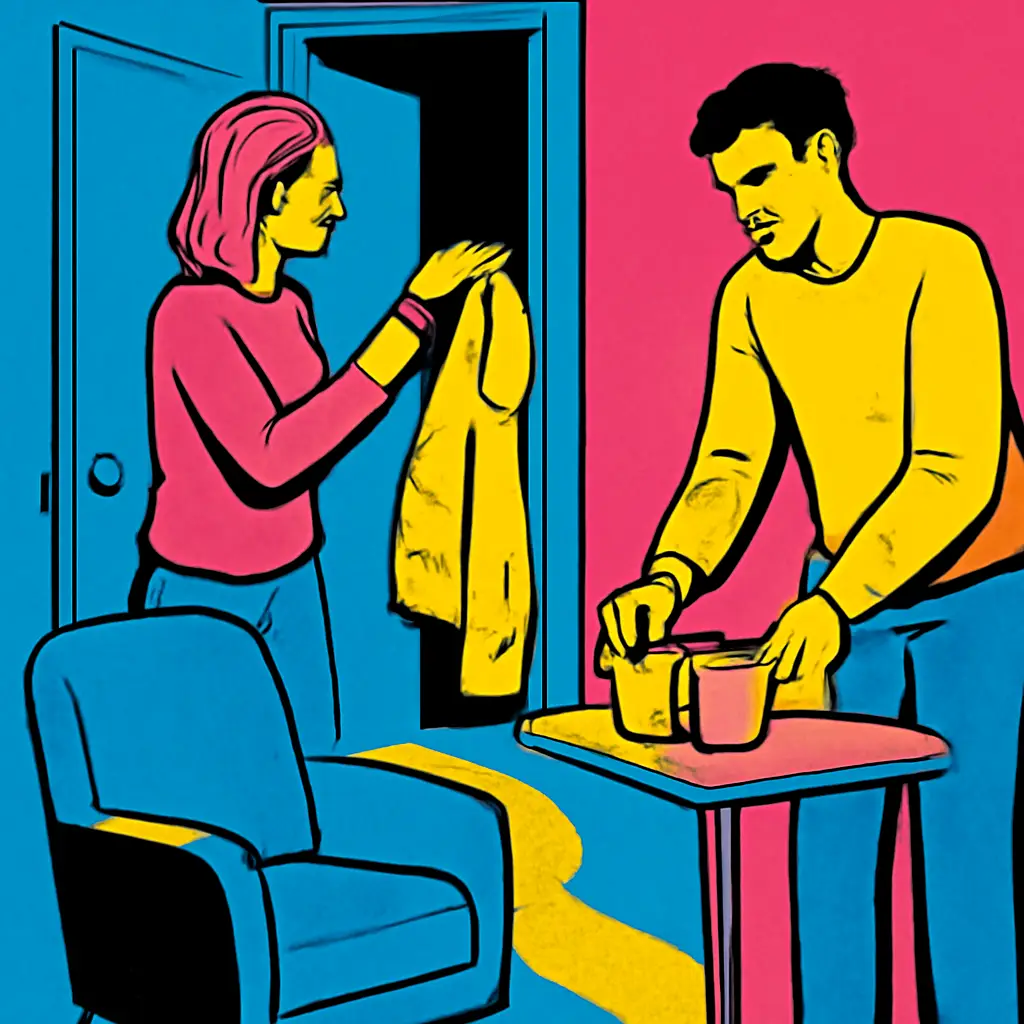
Set the table, put out napkins, and choose where coats and bags will go. Move daily counter residents—mail, appliances you will not use, reusable bottles, and dish racks—out of the cooking zone. This is temporary event staging, not a demand to permanently declutter your home.
Then make a landing tray. Put wine opener, bottle stopper, napkins, extra spoons, and any drinks tools on it. When guests arrive, the tray can live on the table, a sturdy side table, or another room. It prevents the familiar scatter of small objects that makes a tiny counter feel instantly full.
One hour before: make the kitchen look nearly finished
By this point, aim to have only the food that still needs active attention out in the kitchen. Put serving utensils in their final dishes. Fill a water pitcher. Open packages and discard wrapping. Stack clean bowls or plates where they will be used.
Keep chilled ingredients chilled until you need them, particularly foods containing meat, seafood, eggs, dairy, or cooked leftovers. Likewise, keep hot foods properly hot until serving. A compact kitchen is not a reason to let perishable food linger on a warm counter while you solve a space problem.
When guests arrive: stop trying to finish everything
Greeting people and cooking a complicated final course are competing tasks. Plan for an arrival snack that needs no assembly: nuts, olives, bread, sturdy crackers, or vegetables with a dip already in a bowl. Put it away from the protected counter before the doorbell rings.
Then give yourself permission to sit down with guests while the main dish rests or reheats gently. A short pause in the cooking is not a hosting failure; it is often what makes a home meal feel like a gathering rather than a demonstration.
Turn the table into a calm service station
In a larger home, buffet service can be convenient. In a small kitchen, it is often the best way to keep guests from clustering in the doorway while you manage hot food. Put the main dish, side, plates, and utensils on the dining table or another stable surface. Leave the kitchen for refills and final cooking only.
Arrange items in the order people use them: plates first, then main dish and sides, then utensils and napkins. Water and other drinks should sit at one end, not between the serving dishes. This reduces reaching across hot food and makes the table feel intentional rather than improvised.
If the table is too small for both serving and eating, serve guests a first portion from the kitchen in a simple sequence. You do not need to produce perfectly identical plates. A spoonful of the main, a side, and a salad is plenty. Put the serving dishes away or on a heat-safe surface once everyone has food.
A hypothetical menu that protects your workspace
For a hypothetical dinner for four, consider baked pasta with vegetables, a lemony green salad, good bread, and sliced cake with berries. The pasta is assembled earlier and baked in the dish in which it will be served. The salad greens are washed and refrigerated; the dressing waits in a jar. Bread goes into a basket before guests arrive. The cake is already on its plate.
In the final stretch, the only counter jobs are tossing the salad, removing the pasta from the oven, and cutting the cake after dinner. The table handles bread, drinks, plates, and eventually the pasta dish. The menu has contrast—warm and hearty, crisp and fresh, sweet at the end—but it does not require an assembly line.
The same structure works with many food preferences: a hearty vegetable soup plus a large salad; a baked fish or bean dish with a grain side; or a room-temperature grain salad paired with a warm soup. The useful pattern is not the specific menu. It is limiting the number of dishes that demand attention at the same time.
Prevent the cleanup pile before it starts
Do not aim to wash every item while people are eating. Instead, create a single bus zone: a tray, tub, or one side of the sink for used glasses and plates. Clear only obvious trash, empty bottles, and items you need again. Everything else can wait.
Use a small number of tools deliberately. One sharp knife washed and reused is easier to manage than three abandoned knives. One large cutting board is easier to clean than a series of tiny boards. Line a bowl with a clean kitchen towel only if it has a clear job, such as holding bread; avoid creating decorative stations that produce more washing.
After the meal, refrigerate perishable leftovers promptly in shallow, manageable containers rather than leaving a large warm serving dish on the counter. If your refrigerator is crowded, make space before cooking, not when everyone is ready to leave.
Mistakes that make a tight kitchen feel smaller
- Setting out every ingredient. Treating the counter like a television cooking set guarantees that active tools get buried. Keep only the next stage visible.
- Making every dish special. A dinner needs one focal point, not a showpiece main, intricate side, elaborate appetizer, and plated dessert.
- Using the sink as permanent storage. A sink full of bowls removes your easiest reset point. Rinse and stack, or move dishes to a designated bus area.
- Inviting guests to “help themselves” in a congested kitchen. Offer a specific task elsewhere, such as pouring water or carrying bread to the table, instead of creating a crowd around the stove.
- Leaving serving tools undecided. A hot dish without a spoon sends you digging through drawers at precisely the wrong moment.
Make your next dinner easier in ten minutes
Choose one meal you already like to make. Write down every object that will need counter space in its final 30 minutes: pan, cutting board, serving dish, salad bowl, drink tools, and dirty dishes. Then assign each one a home that is not your protected counter. That small rehearsal reveals whether the menu fits your kitchen—and gives you a calmer evening before you buy a single organizing product.





Ad