

You arrive late, leave early, and tell yourself there is no point unpacking. By bedtime, though, your toothbrush is beneath a sweater, your charger is in a shoe, and the clean shirt for tomorrow has somehow vanished into the larger suitcase. One-night hotel stops create a particular kind of travel mess: you need a handful of things immediately, but opening every compartment makes the next morning harder.
A simple answer is a next bed bag: a small pouch, packing cube, or lightweight tote that holds only what you need between arriving at one bed and leaving it the next day. Your main luggage can remain mostly closed. This is not a second toiletry kit or a miniature suitcase. It is a deliberately small transition kit for the evening, overnight, and next morning.
The system is especially useful on road trips, rail itineraries, organized tours, overnight layovers, and any trip with several short accommodation stays. It reduces rummaging, but its larger benefit is decision-making: at a tired moment, the things you need are already grouped by when you will use them.
The best overnight setup is not the one that brings every comfort into the room. It is the one that lets you settle in and leave again without turning a short stop into a full unpack-and-repack project.
Give the bag one job: get you from arrival to departure
The name is a useful boundary. A next bed bag covers the period after you enter your room until you walk out the next morning. It should contain items for washing up, sleeping, dressing, and powering the devices you will use overnight.
It should not become a catchall for sightseeing gear, spare clothing, snacks for several days, guidebooks, or items you might possibly want. Those belong in your day bag or main luggage. If the next bed bag is too large, you will unpack it as thoroughly as your suitcase and lose the advantage.
A good size is one that can sit on a bathroom counter or one chair without taking over the room. A zippered pouch inside a small tote works well: the pouch contains items that could spill or scatter, while the tote holds soft items such as sleepwear.
Pack by the order you use things, not by product category
Traditional packing often groups all electronics together and all toiletries together. For a brief stay, it is more helpful to pack in the sequence your evening actually follows. That makes the bag easier to use in poor lighting, when you are tired, or when another person is sharing the room.
At the top: the first five minutes
Place the things you reach for immediately near the opening:
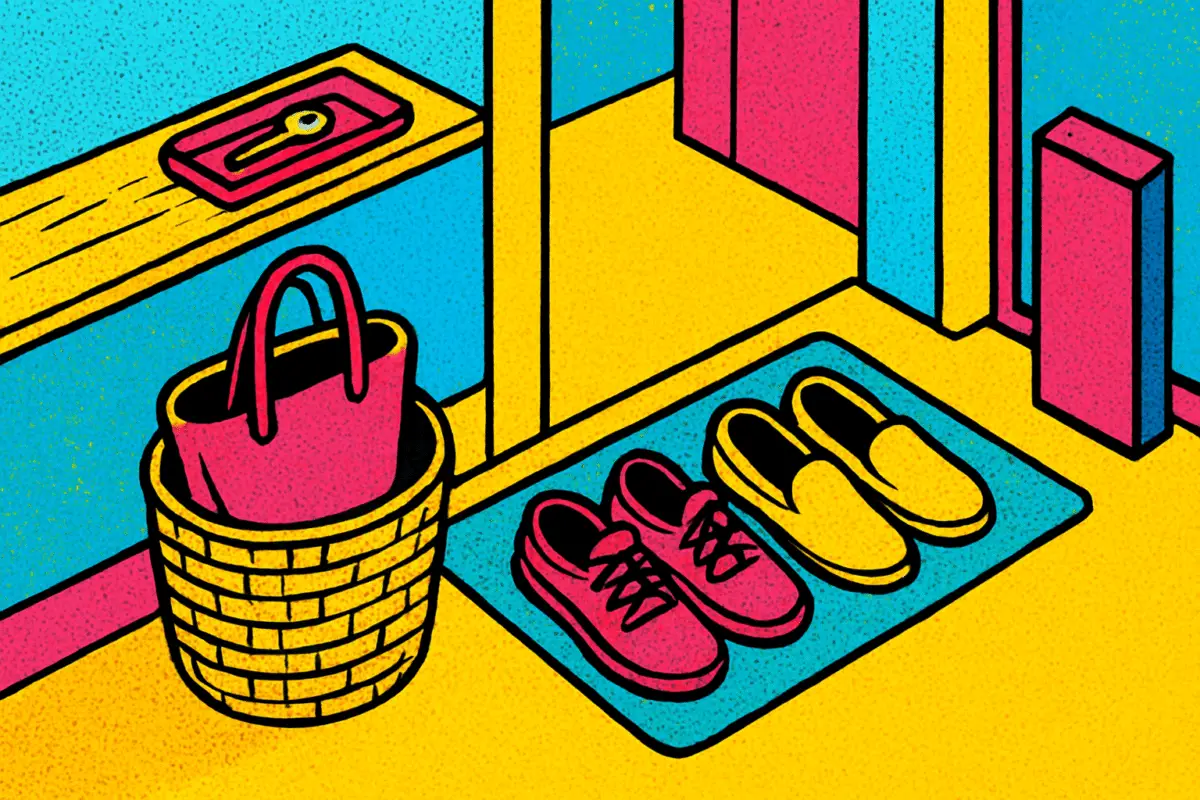
- Room key holder or a clearly designated place for the key
- Phone charging cable and plug
- Glasses case, earplugs, or a sleep mask if you use them
- A small empty pouch for jewelry, watch, or pocket contents
The charging cable belongs at the top because it is easy to postpone charging until it is too late. Plug in your phone before changing clothes or opening the television. If you travel with a power adapter, keep the adapter attached to or immediately beside the plug so the two do not separate.
In the middle: the bedtime layer
This layer contains your normal evening basics: sleepwear, toothbrush and toothpaste, face-washing items, retainers or their case if applicable, and any other small personal-care item you reliably use before bed. A leak-resistant toiletry pouch is useful here, even if the rest of your toiletries live elsewhere.
Keep quantities realistic. A one-night bag does not need every grooming item you own. On a longer trip with frequent moves, a travel-size version of a few essentials may be worthwhile precisely because it stays packed. If you prefer not to duplicate anything, move your regular pouch into the next bed bag before each short stay instead.
At the bottom: tomorrow’s first layer
Pack one complete next-day clothing set at the bottom: underwear, socks, and the shirt or other item most likely to be buried in the suitcase. Fold it together or put it in a slim packing cube. This prevents the familiar morning scene in which you pull half the suitcase apart looking for a single clean sock.
Do not put every possible weather option in this bag. Check the expected conditions when you are choosing clothes for the following day, then make one reasonable choice. A light outer layer can stay with your day bag if you will need it when you step outside.
Keep valuables and trip-critical items on a separate track
The next bed bag is about convenience, not security. Keep essentials that must remain close to you—such as passport or other identity documents, payment cards, keys, and any necessary personal items—in your usual secure personal bag. Do not make the overnight bag the only home for them.
This separation also protects the system from a common failure: leaving the room with the small bag but forgetting the personal bag, or vice versa. Each bag has a clear role.
- Personal bag: identity, money, keys, essential personal items, and items you need while in transit.
- Next bed bag: evening, sleep, and early-morning routine.
- Main luggage: the rest of the trip’s clothing, backups, and items not needed until a longer stop.
- Day bag: items for the day after you leave the room.
Set up the room without spreading out
The way you use the bag matters as much as what is in it. A short-stay room setup should be reversible in under a minute.
- Put the main suitcase in one stable place, ideally on a luggage rack or a hard surface rather than on the bed.
- Take out the next bed bag and place it in one visible spot.
- Plug in the phone and put the cable back in the bag’s top pocket once it is connected, leaving only the end in use.
- Remove only tonight’s items and tomorrow’s clothing. Keep them on one chair, one side of the bathroom counter, or one designated shelf.
- Before sleep, return small loose items to their pouch rather than leaving them on multiple surfaces.
This setup limits the number of places that can hide an item. Hotel rooms are full of accidental storage zones: bedside drawers, dark gaps behind curtains, bathroom ledges, and deep bedding. The fewer zones you use, the easier the morning becomes.
Make the morning reset part of getting dressed
The bag works only if it resets quickly. Rather than adding a separate packing task just before departure, rebuild it in the order of your morning routine.
After washing up, return the toiletry pouch. When you change out of sleepwear, place it in a dedicated laundry bag or a clearly separate compartment; do not push it back among clean items. Unplug the phone, coil the cable loosely, and return it to its top position. Put on tomorrow’s clothes, then close the bag.
At that point, the only things left outside the bag should be what you are actively carrying out: phone, personal bag, room key, outerwear, and day bag. The main suitcase has stayed closed, so it needs little more than a quick zip check.
A hypothetical overnight stop
Imagine an illustrative rail trip with three hotels in four nights. On the second evening, a traveler arrives at 9 p.m. and plans to leave at 7 a.m. Their next bed bag holds sleepwear, a toiletry pouch, a charging cable, glasses case, laundry pouch, and the next day’s shirt, socks, and underwear. They take out only those items.
In the morning, the worn clothes go into the laundry pouch, the cable returns to the top, and the bag is closed while they are getting dressed. The suitcase never needs to be opened. This does not eliminate the need to look around the room before leaving, but it makes that look much simpler because fewer things were distributed around it.
Adjust the system for the stay you actually have
Not every short stay deserves the same setup. Use the bag as a flexible rule, not a ritual.
For a very late arrival
Make it even smaller: charger, sleepwear, toothbrush, and tomorrow’s underwear and shirt. Shower supplies can stay packed if you know you will not use them. The goal is to get to sleep without a search operation.
For a shared room
A bag that zips fully closed is more useful than an open tote. It lets you carry your routine to the bathroom in one piece and keeps your belongings from taking over shared surfaces. Keep noise in mind too: prepare the next morning’s clothes before bed if you need to leave earlier than others.
For a two- or three-night stay
The next bed bag can still work, but add only what supports your routine. You may unpack more clothing into a drawer or hang it up, while keeping the nightly essentials together. This preserves a reliable landing place for small items that otherwise drift around the room.
Common mistakes that make the bag less useful
- Using it as an emergency supply closet. If it is packed with every contingency item, it becomes bulky and hard to reset. Store backups in main luggage.
- Keeping loose liquids beside clothing. Put personal-care liquids in a closed pouch. A small spill is much easier to manage when it is contained.
- Adding one-off items without removing them. After a few stops, receipts, wrappers, maps, and unused samples can turn the bag into clutter. Empty these out when you have a longer stay.
- Putting the bag out of sight. A bag under the bed or in a closet is easy to overlook. Give it a visible, repeatable location.
- Forgetting to replenish during a longer pause. Once you have time, restock any ordinary item that is running low and return the bag to its baseline contents.
Build it once before the trip
Start by laying out what you use from bedtime through leaving your home on an ordinary morning. Then remove anything that is not needed for a single night away. Put the remaining items into the smallest bag that closes comfortably.
Before your next multi-stop trip, do one small test: pack the bag, place your regular suitcase out of reach, and get ready for bed and morning using only the bag plus your personal bag. Every time you need to retrieve something else, decide whether that item belongs in the next bed bag—or whether you can comfortably do without it for one night. That small rehearsal creates a setup you will actually use when travel is tiring.





Ad