

The trouble often starts at the checkout: one bag has cans, a large bottle, and several other “small” items, while the other holds bread and salad. The heavy bag seems manageable for the walk from the car or bus stop—until its handles pull on your fingers, your shoulder creeps upward, and you have to wrestle it through the door.
You do not need perfect posture or specialized gear to make grocery carrying less taxing. The useful goal is simpler: make each load easier to control, spread the work across your body, and remove the rushed moments when awkward lifting happens. A short packing-and-unloading routine can help protect your hands, wrists, shoulders, and back from unnecessary irritation.
A grocery load is not just a weight problem. It is a shape, balance, distance, and timing problem—and those are often easier to change than the groceries themselves.
Why an ordinary bag can feel surprisingly hard to carry
Two bags can weigh about the same but feel completely different. A compact bag with a firm bottom is relatively predictable. A bag with one heavy item rolling against lighter groceries shifts as you walk. Your grip and shoulder then work continuously to keep it steady.
Thin handles add another issue: they concentrate pressure in a narrow strip across the fingers or palm. Carrying the bag with a bent wrist, or holding it away from your side to avoid bumping your leg, increases the leverage your arm has to manage. Stairs, curbs, keys, a closing car door, and a slippery entryway all make the final minute of the trip more demanding.
The answer is not necessarily to carry very little. It is to avoid combining a long walk, an uneven load, an awkward grip, and a one-handed lift into one task.
Pack by density, not by the order items reach the belt
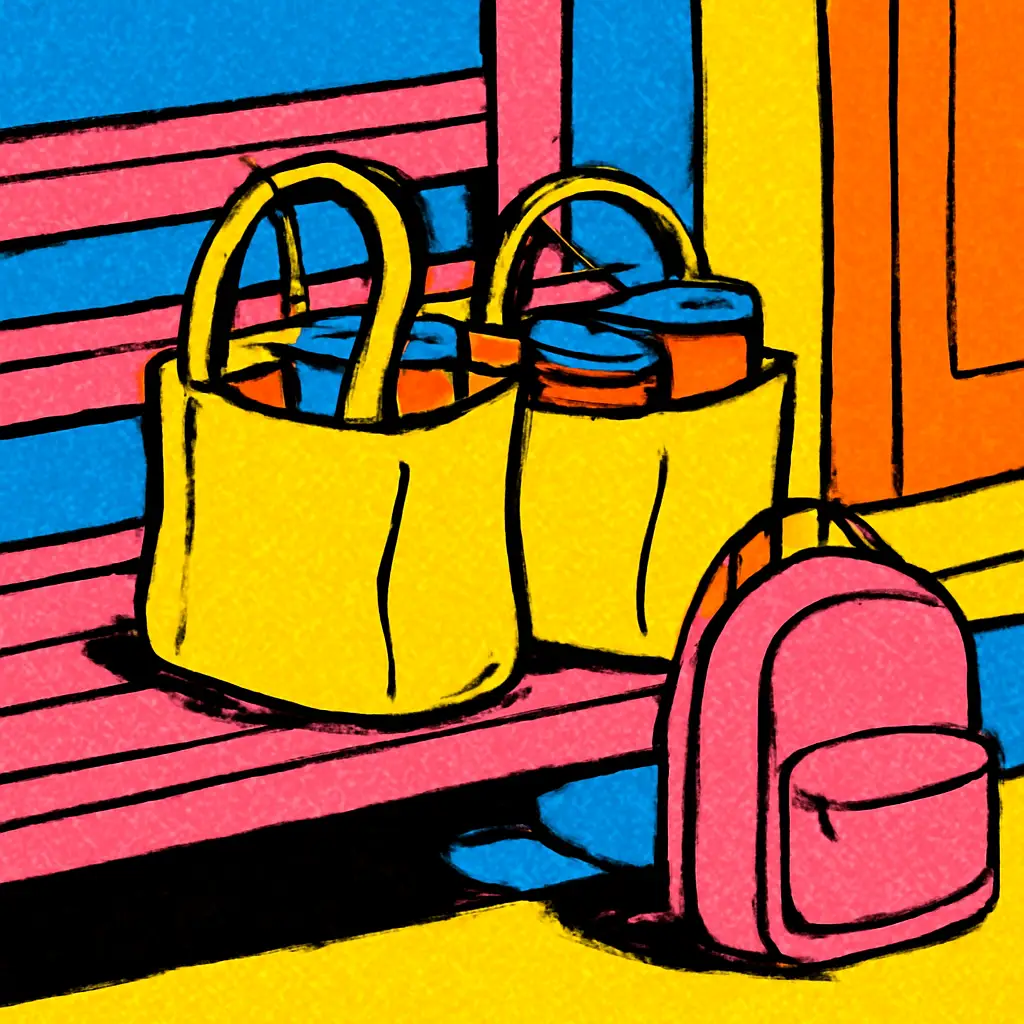
Before you leave the store—or while unloading a delivery box—give the densest items a deliberate home. Cans, jars, cartons, and large bottles should not all collect in one bag simply because they were scanned together.
Build two stable loads when possible
- Put several dense items in each of two bags rather than filling one bag with all the heavy items.
- Place heavier items low and near the center of each bag. This reduces the tendency for the bag to tip or swing.
- Use lighter, bulky items such as paper goods, greens, bread, or boxed cereal to fill open space, not to disguise a bag that is already too heavy.
- Keep fragile items from becoming the structural support for heavier groceries.
If you are using a reusable bag with a broad base, it can be a good home for dense items because it stays upright while you pack. A soft tote can still work well, but it benefits from a smaller, more even load.
At self-checkout, pause before you pay and look at the bags as a pair. Moving one jar from the heavy side to the light side can be more useful than trying to “tough out” the imbalance later.
Do not confuse equal bag size with equal effort
A large bag may look as though it should carry more. But a larger bag also invites overfilling, and a half-full bag with a heavy item at one edge can swing more than a smaller, well-packed bag. Choose the amount by what you can lift and control comfortably, not by how much empty fabric remains.
Choose a carrying method for the trip you actually have
The best way to carry groceries depends on your route. A few steps from a parked car calls for a different plan than a walk, a flight of stairs, or public transit.
For a short, level trip
Carry two reasonably balanced bags, one at each side. Let your arms hang naturally rather than bending your elbows to hold the bags high. Keep the bags close enough that they are not pulling your arms outward. Walk at a pace that lets you place your feet securely, especially on uneven pavement.
If one bag is slightly heavier, switch sides before you are tired rather than waiting until one shoulder starts to complain. A planned switch is steadier and less awkward than trying to transfer a bag while distracted at the door.
For a walk with stairs, curbs, or a busy entrance
Reduce the number of loose things you must manage. Put keys, phone, and transit card in an easy-to-reach pocket before lifting your bags. If a bag is heavy enough that you need to set it down repeatedly, make an intentional second trip from the car or use a cart where appropriate.
On stairs, avoid rushing to keep a swinging bag from hitting the steps. Hold the rail whenever you can do so without compromising the load. If that means taking two trips, that is a sensible tradeoff.
For a longer walk
A backpack can distribute a moderate, stable load across both shoulders, provided it fits comfortably and the contents do not shift. Put the denser items closest to your back and pad sharp corners with softer groceries. Use both shoulder straps; carrying a backpack from one strap recreates much of the uneven pull you were trying to avoid.
For bulky or substantial shopping, a wheeled cart can remove much of the carrying requirement. Consider the route first: narrow stairs, deep snow, or many curbs can make a cart harder to manage. The useful tool is the one you can control safely from store to kitchen.
Give your hands a better grip
Many grocery-carrying problems begin with the handles, not the contents. A handle that digs into your fingers encourages you to grip harder, curl your wrist, and tense your forearm.
- Prefer bags with wide, comfortable handles that are securely attached.
- Use bags that are dry and free of food residue. Damp handles are harder to control.
- When you have a choice, carry a bag by its intended handles rather than pinching the top edge of a paper or plastic bag.
- Keep your wrist roughly in line with your forearm rather than sharply bent forward or sideways.
- Do not loop heavy bag handles over just a few fingers. It may feel convenient briefly, but it concentrates pressure and makes it harder to release the bag quickly.
A handle wrap or padded grip can make an existing bag more comfortable, but it does not solve an overloaded bag. Treat it as a comfort improvement, not permission to add more weight.
Use a “staging spot” before you start unloading
The most awkward lift of the trip is often not the walk. It is twisting from a car seat, reaching over a threshold, or bending down to grab a bag from the floor while holding another bag in one hand.
Create a predictable place where groceries can land first: a clear section of a counter, a sturdy bench near the entry, or a small table. The point is not to unpack everything immediately. It is to turn one complex move into several simple ones.
- Set down what you are carrying before opening mail, answering a message, or handling keys.
- Open the door and clear the route before returning for the next load.
- Bring bags to the staging spot rather than trying to sort groceries while holding them.
- Unload heavy items one at a time with two hands when practical.
- Return bags to their storage place only after the floor and entry are clear.
This routine matters because fatigue and distraction tend to peak at the end of an errand. A clear landing zone removes the temptation to balance a bag on a chair arm, step around it in the hallway, or twist while reaching for a cabinet.
Make a two-trip plan feel normal, not like a failure
One overloaded trip can seem efficient, but it is rarely a meaningful time saver if you need to readjust your grip, move cautiously, or recover from a sore shoulder afterward. Two controlled trips are often the more efficient system overall.
Try assigning bags a role. The “first trip” can hold refrigerated and frozen items, plus anything you need to put away promptly. The “second trip” can hold shelf-stable goods and lighter items. This gives a practical reason to split the load rather than treating the second trip as extra work.
For an illustrative example, imagine a shopper who normally carries four dense pantry items, a large bottle, and produce in one tote. They could place two pantry items and the bottle in a compact bag, two pantry items and produce in another, and carry the bread separately or in a backpack. The exact contents are less important than the result: neither hand is managing the entire dense load alone, and the bags are less likely to swing.
Small habits that prevent repeat strain
Grocery carrying is a recurring task, so small adjustments compound. Keep your most reliable reusable bags near the door, in the car, or folded inside a larger bag. Replace bags with stretched stitching or damaged handles before they fail under load. If a certain store tends to package heavy items in a way that does not work for your walk home, repack at a stable surface before you leave.
It also helps to shop with a route in mind. If you know you will be walking several blocks, choose smaller trips more often when that is realistic, or prioritize the items that are hardest to carry on a separate run with a cart or another person. This is not about making shopping complicated; it is about matching the plan to the difficult part of the trip.
Pay attention to pain and loss of control
Momentary effort is normal when carrying groceries. Pain, tingling, numbness, weakness, or a feeling that you may drop the bag are signals to set the load down and change the plan. Do not try to compensate by gripping harder or pulling one shoulder upward.
If pain follows an injury, is severe, keeps returning, or interferes with normal use of your hand, arm, shoulder, or back, it is sensible to seek guidance from a qualified health professional. Practical bag changes can reduce an everyday aggravation, but they cannot identify the cause of persistent symptoms.
Your next grocery-trip reset
Before your next shopping trip, choose one reusable bag with the most comfortable handles and clear a small staging spot near your entrance. At checkout, divide the dense items between at least two containers. That one pause—before you start walking—is where most of the strain-prevention work gets done.




Ad