

Sometimes a gathering has all the right ingredients—people you like, something to drink, a few snacks—and still reaches the familiar pause where everyone stands near the food and asks what everyone has been watching. A tiny museum night gives the room a gentle structure without turning it into a formal party game.
Each guest brings one ordinary, portable object: a worn keychain, a grocery list magnet, a much-repaired kitchen tool, a postcard, a strange button, or a childhood pencil case. They make a small exhibit label for it. Then everyone walks through the displays, reads the labels, and hears a few short stories.
The point is not to bring an impressive possession or reveal a dramatic personal history. It is to notice that ordinary things carry taste, routines, accidents, inherited habits, and small jokes. This format works especially well for friends who do not all know one another, for birthdays where the guest of honor does not want to be the sole focus, and for low-energy hosts who want an activity that does not require leading a game all evening.
Set a narrow, reassuring invitation
The invitation determines whether guests arrive excited or apologetic. “Bring any interesting object” is broad enough to make people overthink. Give a clear size limit and a permission slip to keep it humble.
Try wording such as: Bring one small, nonvaluable everyday object that has a story, a use, or a mystery. Nothing fragile, irreplaceable, or expensive. We’ll give it a museum label and take a short tour.
The phrase “everyday object” matters. It steers people away from treating the night as a show-and-tell contest. A concert souvenir may be meaningful, but so may a bent measuring spoon that always gets used for coffee. The latter is often easier for other people to ask about.
Give guests a deadline that reduces last-minute uncertainty. Send the reminder the day before and say that arriving without an item is completely fine; they can choose an object from their bag, coat pocket, or the host’s spare-object basket.
Build a spare-object basket
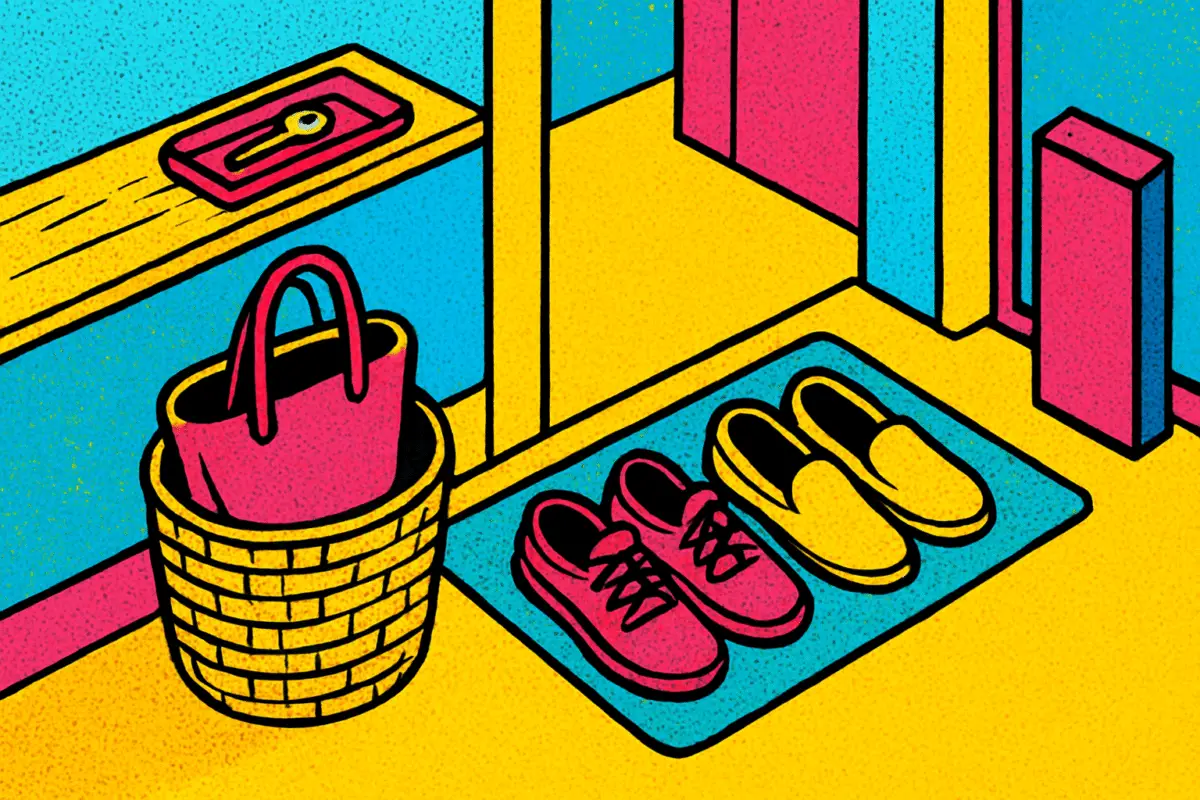
Put a small basket by the entrance with harmless extras: a clothespin, a tea bag, a deck of cards, a paper clip, a wooden spoon, an unused birthday candle, or a luggage tag. This solves two problems at once. A guest who forgot can participate, and someone who does not want to discuss a personal possession can still make a playful label.
Do not use items that are dirty, sharp, or food that will sit out for hours. The objects only need to be safe to handle and easy to return to the basket afterward.
Make labels that invite curiosity, not biography
A good museum label gives visitors a way into the object without forcing its owner to explain their entire life. Set out index cards, pens, and tape, or ask guests to write their labels before they arrive. Four short prompts are enough:
- Object title: Give it a real or invented exhibition title.
- Approximate era: “Since college,” “found last winter,” or “still in daily use.”
- One sentence of context: What is it for, where did it come from, or why was it kept?
- Visitor question: Ask something others can answer, such as “What would you use this for?” or “What object in your home has survived the longest?”
The visitor question is the useful twist. It turns a label from a closed statement into a conversational handhold. It also means a person can contribute without being put on the spot to deliver a polished story.
For example, an illustrative label might read: “The Last Reliable Pen.” Since 2019. This pen has moved through three bags and has outlasted every supposedly better pen in the house. Visitor question: What everyday item do you buy repeatedly even though you already own several?”
That label is specific enough to feel human, but no one has to explain an intimate memory to understand it.
The best exhibit is not the object with the biggest backstory. It is the one that gives other people permission to notice their own small rituals.
Arrange the room like a tiny exhibit, not a school project
You do not need display cases, themed décor, or a large home. Clear a coffee table, sideboard, bookshelf, or one end of a dining table. Give each object a little breathing room and place its label directly in front of it. If space is tight, use a tray, baking sheet, or large piece of paper as the designated gallery.
Choose a surface away from active food preparation and drink spills. If objects are placed on a dining table, set the exhibits up after the meal rather than asking guests to eat around them.
Simple lighting is enough. A lamp near the display makes it feel intentional, but avoid candles near paper labels and objects. Background music can help while people arrive, then turn it down for the tour. The purpose is conversation, not an atmosphere so elaborate that guests worry about touching the wrong thing.
Give the exhibits a clear boundary
Use a card that says “Please ask before handling” if the objects are arranged together. Most guests will naturally ask anyway, but the note protects delicate items and lets people decide what kind of interaction they want.
It is also reasonable to ask people not to bring anything deeply private, politically charged, or valuable. A tiny museum night should create options for conversation, not pressure to disclose or defend something.
Run the evening in three relaxed phases
The event does not need a strict schedule. It does benefit from a beginning, a middle, and an ending, so the gallery does not become an abandoned centerpiece.
- Label-making on arrival. Give people about ten minutes to settle in, choose a spare object if needed, and write a label. The host can write one too; do not spend the whole time organizing everyone else.
- Quiet gallery walk. Invite people to circulate, read, and ask questions in small clusters. A quiet first look is helpful because it removes the feeling that every guest must immediately perform for the full room.
- Optional curator moments. Gather everyone and offer each person up to one minute to add one detail that did not fit on the label. Passing is always allowed. End with one broad question: “Which exhibit made you look differently at something in your own home?”
Keep the spoken portion short. Once an explanation turns into a lengthy sequence of stories, guests who are shy, tired, or unfamiliar with the group can drift away. One detail is usually more memorable than a full history.
Help conversation move beyond “What is that?”
People often need a second question after the obvious first one. Put a few prompts on a card near the gallery, or use them yourself when the room goes quiet:
- What makes this version better than a newer one?
- Did you choose it, inherit it, find it, or get stuck with it?
- What would an archaeologist get wrong about this object?
- What is the least glamorous job it does?
- If this object disappeared tomorrow, what would you miss first?
- What object would make a good companion exhibit?
These questions work because they are about use, interpretation, and imagination rather than achievement. They let a guest discuss a cheap, funny, or unremarkable item with as much ease as an object that has sentimental value.
Avoid the few choices that make the format feel awkward
Do not grade, vote on, or rank the exhibits
A ballot for “best object” changes the mood from curiosity to competition. If you want a closing activity, ask each guest to name an exhibit they will remember and why. The focus stays on attention rather than winning.
Do not force a theme on the first try
“Objects from childhood” or “things from a trip” can be enjoyable later, but both can exclude people or steer the evening toward sensitive material. Start with everyday objects. If the group likes the format, a future edition can use a narrower theme such as “tools with mysterious purposes” or “the object you would rescue from a junk drawer.”
Do not make every guest speak in front of everyone
Some people shine in pairs and become quiet in a group. The gallery walk already allows the important part: individual conversation. Treat the full-group share as a bonus, not the main event.
Make the ending easy and memorable
Before people leave, take one wide photo of the exhibit only if everyone is comfortable with it. Avoid photographing labels that include names or personal details unless the group has agreed. A simpler keepsake is to collect the labels in an envelope and hand each person their card as they go.
You can also create a playful closing ritual: each person chooses one small habit they want to notice during the coming week, inspired by an exhibit. Someone may decide to finally mend a favorite tote bag; someone else may pay attention to the object they reach for first every morning. Nothing needs to be purchased, fixed, or optimized.
For your next gathering, send a two-sentence invitation and place a basket of backup objects by the door. That is enough preparation to turn a roomful of acquaintances into temporary museum visitors—and to give them something more interesting to talk about than the weather.





Ad