

You are three pages into a chapter, and the bottom half of every page is crowded with tiny type. One footnote sends you to a source; that source raises a question; then you return to discover you no longer know what point the author was making. Reading every note immediately feels conscientious, but it can turn one assigned chapter into a maze.
A better approach is to give the chapter’s main argument, its supporting evidence, and its scholarly side paths different jobs. You do not have to ignore footnotes. You need a system for deciding when a note deserves your attention.
First, know what footnotes are doing
Footnotes and endnotes are not all alike. Before beginning a dense reading, glance at several notes near the start, middle, and end. They usually fall into a few useful categories:
- Source notes identify where a fact, quotation, data point, or interpretation came from.
- Qualification notes add an exception, a definition, an uncertainty, or a limitation that would interrupt the main sentence.
- Conversation notes briefly disagree with, refine, or credit another scholar’s view.
- Evidence notes provide an example, a document reference, or further detail behind a claim.
- Detour notes contain a related observation that is interesting but not necessary for the chapter’s immediate argument.
This quick scan changes the task. A chapter with extensive source notes does not necessarily require extensive note-reading. The author may be documenting careful research rather than hiding essential ideas below the line.
The goal is not to prove that you noticed every footnote. The goal is to be able to explain what the author claims, how the author supports it, and which complications actually change your understanding.
Set a reading purpose before you open the first note
Your purpose determines the depth of attention each note earns. Write one short line at the top of your page or document:
- For discussion: “I need the central claim, two pieces of evidence, and one question.”
- For an essay: “I need to find the author’s position on this specific issue and the sources worth tracing.”
- For an exam: “I need the chapter’s framework, key terms, and the distinctions the author makes.”
- For a research project: “I need to identify useful primary sources and major scholarly disagreements.”
A research project may justify following more citations. A seminar discussion usually does not. Without a stated purpose, every footnote can feel equally urgent.
Use three lanes instead of one stop-and-start reading path
Think of the page as having three lanes. You can move among them, but not all at the same speed.
Lane 1: The argument
Read the main text continuously for a paragraph or two. At the end of each section, pause and write a plain-language note of no more than one sentence: “The author argues that…” or “This section shows…”
Do not copy a polished sentence from the chapter. Your slightly imperfect wording is useful because it reveals whether you understand the point. If you cannot summarize the section, reread the main text before opening any notes.
Lane 2: The signals
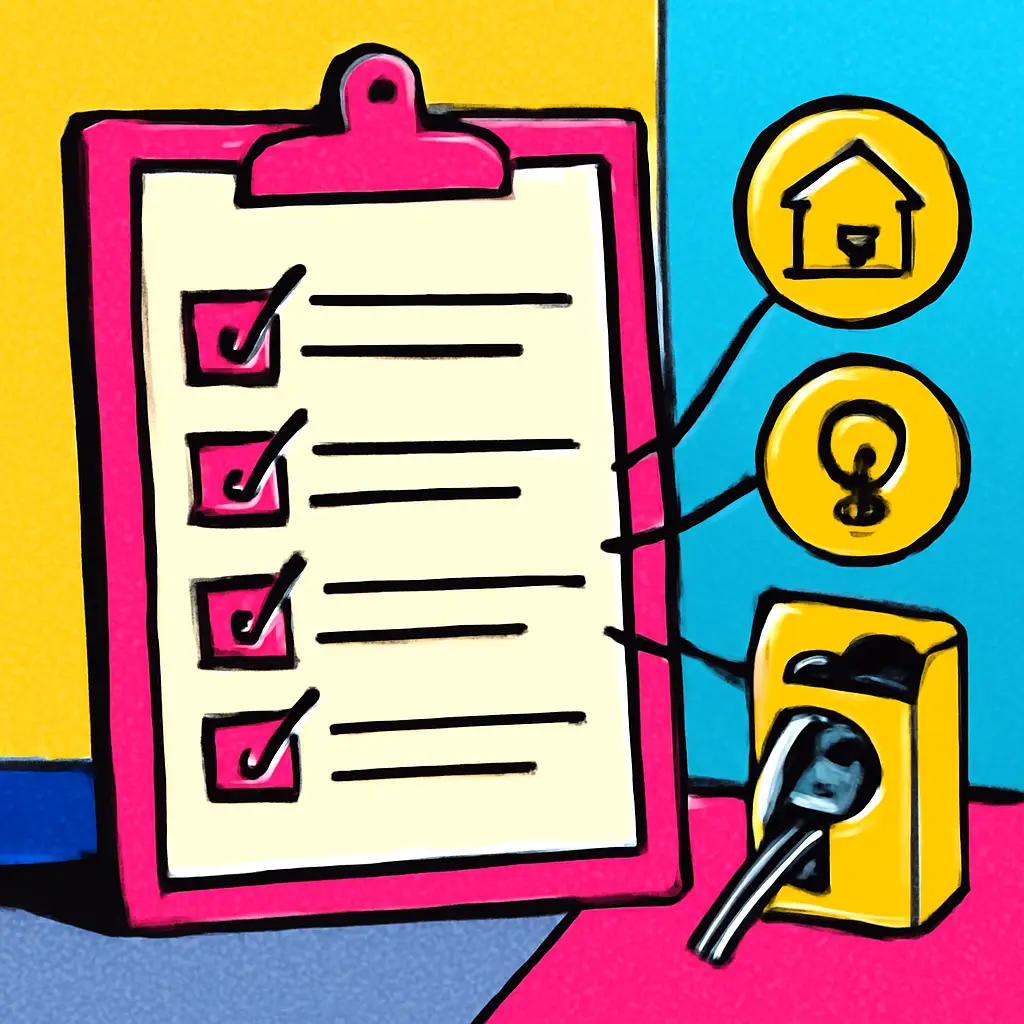
As you read, mark footnote numbers only when the sentence around them gives you a reason to investigate later. A small symbol is enough. Use one mark for each kind of signal:
- Q for a note that seems to qualify or complicate a major claim.
- E for evidence you may need to name in class or use in writing.
- S for a source you may want to locate later.
- ? for a note attached to something you do not understand.
Do not write the note’s content yet. You are merely creating a return route. This preserves the flow of the argument while ensuring that promising notes do not disappear.
Lane 3: The notes themselves
Visit marked notes at a natural break: the end of a subsection, a page, or a short reading session. Read the notes in a small batch, then decide whether they deserve a record.
Most notes need only one of three outcomes: no action, a brief addition to your section summary, or a separate citation lead. That decision is more valuable than producing a long transcript of bibliographic details.
Choose notes by their impact, not their length
A two-line note can completely alter a claim. A ten-line note can be a list of sources you do not need today. Ask these three questions:
- Would this note change how I state the author’s point? If yes, add its qualification to your summary.
- Does this note name evidence that the main text relies on heavily? If yes, capture the source or example in a few words.
- Does this note open a disagreement relevant to my assignment? If yes, write the disagreement as a question you can revisit.
If the answer is no to all three, let the note go. You can return later if your assignment changes.
Make a compact “argument and caveat” record
For a chapter you need to retain, use a page with two columns. The left side follows the chapter; the right side catches only meaningful notes.
| Main-text record | Footnote that matters |
|---|---|
| Section claim in your own words | Exception, competing view, key evidence, or source lead |
| How the author connects this claim to the previous section | Why the note changes or strengthens your understanding |
| One term or distinction to remember | A question to raise in discussion or pursue in research |
Keep the right column short. For example, an illustrative record might say:
Main text: “The policy looked uniform on paper but was applied differently by local officials.”
Footnote: “Important caveat: author says records are incomplete in rural areas; conclusion is stronger for cities.”
That entry is more useful than copying a long archival citation if your immediate task is to discuss the chapter’s reasoning. If you later use the chapter in a paper, return to the original note and record full publication details accurately then.
Handle endnotes without constant page flipping
Endnotes create a physical interruption because the notes live elsewhere. Resist the urge to flip after every superscript number. Put a bookmark or digital split view at the notes, and record only the note numbers you marked while reading the current section.
At the section break, check that cluster in one pass. This grouping helps your working memory: you still remember the paragraph’s point, but you are not repeatedly abandoning it.
If a digital reader makes note pop-ups possible, use them selectively. A pop-up may remove page flipping, but it can still pull attention away from the argument. Close it after you have made a decision; do not let it become a second reading stream.
Notice the difference between a caveat and a distraction
Some students overcorrect and skip every note, which can flatten a careful author into a more certain version of themselves. A qualification note deserves attention when it limits scope, names a contested interpretation, or reveals that a key term has a narrower meaning than it first seemed.
For instance, suppose a chapter says a reform “transformed access to education,” while a note explains that the conclusion applies to a particular region and excludes informal schooling. That is not decorative detail. It tells you how cautiously to repeat the claim.
In contrast, a note listing six additional books on a side issue may be useful only if you are building a bibliography. Respecting scholarship does not mean treating every scholarly trail as your current route.
Common habits that make dense readings harder
Reading all notes before reading the paragraph
This reverses the author’s structure. You encounter context without knowing what it supports. Read the claim first, then decide whether the note adds something essential.
Writing down every citation
Bibliographic transcription is slow and error-prone when you have no planned use for the material. Save full citation capture for sources that fit your assignment. For the rest, a surname, short title cue, or note number may be enough to relocate it.
Treating notes as proof that the main text is complete
A large number of citations shows documentation, not automatic certainty. Continue asking what the evidence demonstrates, what it cannot demonstrate, and whether the author acknowledges limits.
Separating notes from the claim they modify
When you record a useful note, attach it to the sentence or section it affects. A standalone entry such as “Note 47: disagreement” will mean little when you review it several days later.
Use a two-minute closing check
When you finish, close the chapter or move away from the screen. Then answer these questions from memory:
- What is the chapter’s main claim?
- What are two ways the author supports it?
- What is one caveat, exception, or disagreement found in the notes?
- Which one source or question, if any, is worth returning to?
If you can answer all four, you have read both the argument and its edges. If you can only recall note details, reread your section summaries; if you can recall only the headline argument, revisit the marked caveats.
Your next reading session
On the next footnote-heavy assignment, do not change everything at once. Put one purpose sentence at the top of your notes, read the first section without opening a footnote, and mark only notes that qualify a claim, provide needed evidence, or lead directly to your assignment. At the section break, process those marks in a batch. This small shift gives the main argument room to stay visible.







Ad