

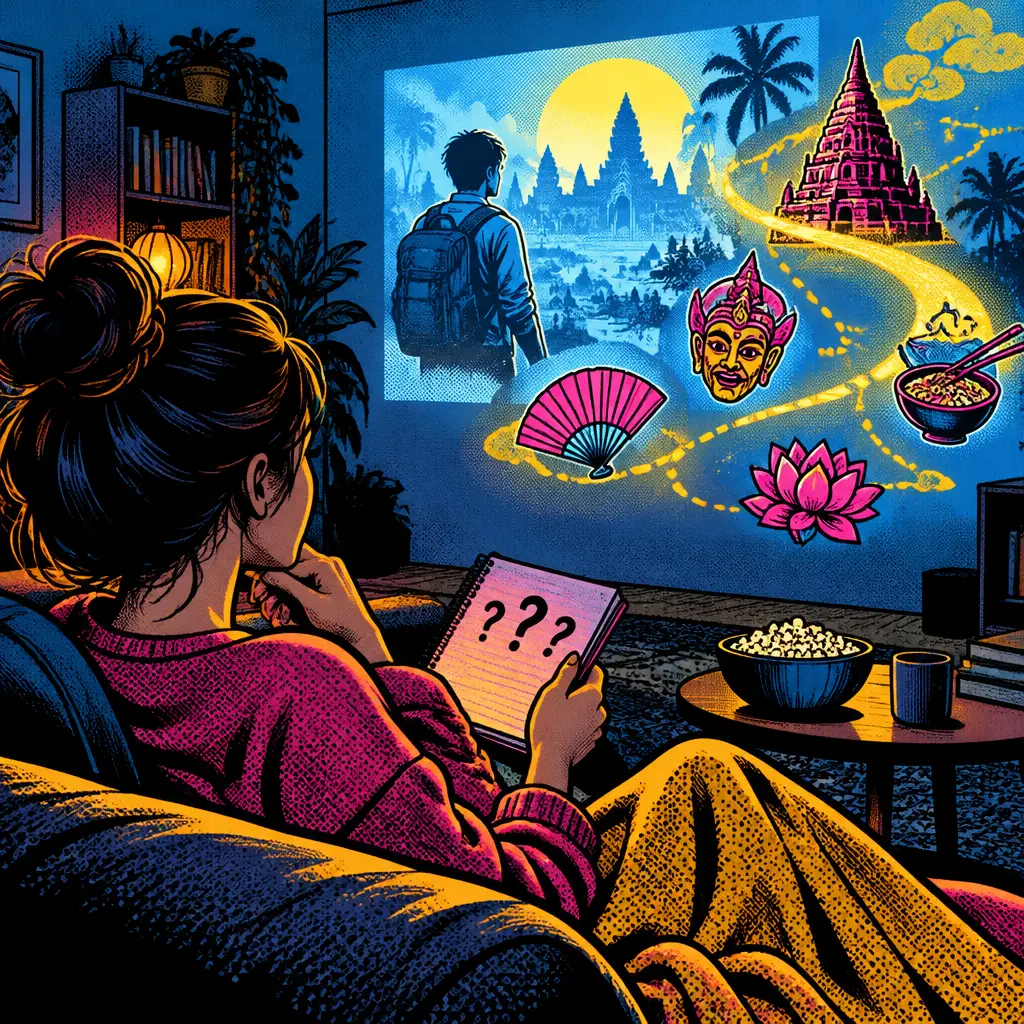
You finally think your child is old enough for the movie you watched on repeat at their age. You make popcorn, announce the title with the gravity of a family tradition, and then—twenty minutes in—they are asking how much is left. Or they laugh at the wrong part. Or they say the hero is annoying.
That disappointment is understandable, but it can quietly turn a shared entertainment moment into a test: Will you love this thing I loved? A better goal is smaller and much more achievable. Give the child a comfortable chance to meet a story that matters to you, while leaving room for their own reaction.
The difference is not merely politeness. When children feel free to be bored, puzzled, delighted, or unconvinced, they are more likely to stay engaged with both the movie and the person sharing it with them.
Choose the viewing moment, not just the movie
A favorite film can be perfectly suitable in content and still be a poor choice for a particular evening. A child who is hungry, overtired, worried about tomorrow, or hoping to play a game is unlikely to give a slow opening much patience. That is not a verdict on the film.
Before suggesting it, consider the practical demands the movie makes. Is it dialogue-heavy? Does it take a while to reveal its premise? Is the humor based on references the child will not recognize? Are there scenes that could feel intense even if the film is generally family-friendly?
Then pair it with a moment that matches those demands. A shorter, sillier movie may work after a busy day. A longer adventure is often better for a quiet weekend afternoon, when pausing does not feel like a failure and bedtime is not looming.
Do a private content-and-pacing check
Memory is selective. Adults often recall the jokes, music, or grand finale and forget a frightening image, a death, a mean-spirited gag, or a lengthy stretch with little action. Think through the whole movie before inviting a child into it. If you are uncertain about material they may find upsetting, choose a different film or save this one for later.
This is also a chance to be honest about your own motive. If the main appeal is nostalgia, that is fine—but nostalgia is not automatically contagious. A movie may have been special because of who watched it with you, when you saw it, or what it represented then. Let the new viewing be its own event.
Make the invitation easy to decline
“You have to see this” creates pressure before the opening credits. So does building up a movie as the funniest, scariest, or best thing ever. Big claims ask a child to agree with your taste rather than simply watch.
Try a modest, specific invitation instead:
- “I liked this adventure movie when I was younger. It has a strange creature and a very dramatic chase scene.”
- “This one starts slowly, but I remember liking the mystery. Want to try the first part with me?”
- “I think you might enjoy the music in this, but it may not be your kind of story. We can switch if it is not working.”
These invitations provide useful information without selling a guaranteed experience. They also establish a valuable exit route: trying a movie is different from committing to finish it.
A beloved movie is an offering, not an inheritance assignment. The shared win is an honest conversation and a pleasant evening—not a matching rating.
Set one simple viewing agreement
Children often hesitate to say they dislike something because an adult appears excited. Make the permission explicit before the film begins. One sentence is enough: “If it feels too scary, too sad, or just not interesting, tell me and we can pause or stop.”
For a younger child, clarify what “pause” means. It can mean a snack break, a question, a quick summary, or ending for the day. It does not mean they have spoiled the occasion. For an older child, avoid hovering for a verdict every few minutes. Permission works best when it is offered calmly and then trusted.
It can help to agree that devices stay away for the opening stretch, perhaps the first 15 or 20 minutes, unless someone needs to stop. This gives the film a fair start without making the entire runtime feel compulsory. If the child is still disengaged after that, believe the evidence.
Give only the context that unlocks the story
Some older films need a little orientation. Their effects, tempo, clothing, or technology may look unfamiliar; a historical setting may be hard to place. A tiny amount of context can turn confusion into curiosity.
Keep it brief and functional. For example: “This was made before people used phones for everything, so the characters cannot instantly contact one another,” or “This story is set when traveling took much longer.” Then let the movie do its job.
Avoid a running commentary about hidden references, famous actors, production trivia, or scenes you loved as a child. Commentary pulls attention away from the child’s first encounter and can make them feel they are missing the correct response. Save most of it for afterward—if they want it.
Answer questions without racing ahead
Questions are often a sign of engagement, not interruption. Answer the immediate question in the simplest useful way. If the film will explain it soon, say so: “That is a good question. I think we are meant to wonder about it right now.”
Try not to provide plot reassurance too early. Telling a worried viewer that a character will be fine can remove tension; telling them a twist is coming can flatten surprise. If a scene is genuinely too intense, pause and deal with the feeling rather than protecting the plot at all costs.
| What you notice | A useful response | Why it helps |
|---|---|---|
| They are restless in the opening scenes | Ask whether they want a short break or would rather choose something else. | It distinguishes temporary discomfort from genuine disinterest. |
| They laugh at a scene you find serious | Let the moment pass, then ask later what struck them as funny. | It invites their perspective instead of policing it. |
| They seem frightened or sad | Pause, acknowledge the feeling, and ask whether to continue. | Emotional safety matters more than finishing a film. |
| They criticize something you adore | Say what you liked about it without arguing them into agreement. | Different taste becomes conversation, not conflict. |
Resist the urge to defend the movie
This is the hardest part. A child might point out a plot hole, dislike a character you admired, or find old-fashioned effects unconvincing. Their reaction may even reveal flaws you had never noticed. That can sting because the movie carries more than its runtime for you.
Instead of responding with “You do not get it,” try questions that make room for observation:
- “What would you have changed?”
- “Which character made the most sense to you?”
- “Was there a part you wanted the movie to spend more time on?”
- “Did anything surprise you?”
If they ask why you love it, answer personally but lightly: “I liked how huge the world felt,” or “That song stayed in my head.” This shares your connection without insisting it should become theirs.
Do not turn the discussion into a lesson on why older movies are important, why their generation has shorter attention spans, or why they should appreciate practical effects, animation, or a particular genre. There may be a future conversation about film history. The first viewing is not the moment to assign it.
Let stopping be a valid ending
When a movie is abandoned halfway through, adults can feel they have lost the whole plan. But a partial watch can still be useful information. Perhaps the child liked the setting but not the pace. Perhaps the story was too intense today. Perhaps this is simply not their genre.
End graciously: “Thanks for giving it a try. What sounds fun now?” A replacement activity prevents the stop from feeling punitive. It also models that entertainment choices can be revised without anyone being at fault.
If they want to return to the movie another day, do not quiz them to prove they were paying attention. Offer a quick, neutral recap of where you stopped. If they do not want to return, let the film rest. Pushing for completion can make both the movie and future invitations feel like homework.
Turn the aftermath into a bridge, not a verdict
The best follow-up is usually small. Make the snack that appeared in the film, listen to one piece of its music, draw an alternate creature or ending, or choose a different movie with one shared element: another mystery, another dance sequence, another story about a reluctant hero.
This approach is especially helpful if the first choice missed. Rather than declaring that the child “does not like old movies” or “is not into fantasy,” identify one element that did land. A child who disliked a two-hour fantasy might still enjoy witty side characters, elaborate costumes, puzzles, or a soundtrack. Those details are more useful than a broad label.
A realistic reset
Imagine a child loses interest in a movie you treasured because the first half has long scenes of adults talking. Instead of bargaining for another thirty minutes, you stop after the agreed opening stretch. Later, you learn they liked the mysterious map but wanted more action. On another evening, you choose a shorter adventure with a faster start. The original film has not been rejected forever; it has simply been placed on a shelf for a later age or a different mood.
That is a far better outcome than finishing under protest. It preserves trust, teaches the child that their taste is allowed to develop, and leaves you both more willing to try another shared story.
Make your next invitation smaller
Pick one movie you care about and describe it in one uninflated sentence. Choose a relaxed viewing window, offer a clear right to pause, and decide in advance that stopping is acceptable. Then ask one curious question afterward—not “Did you like it?” but “What part stayed with you?”
That small shift gives a favorite movie its best chance: not to be copied exactly into someone else’s memory, but to start a new one together.







Ad