

Someone opens a phone album after dinner, finds an old photo, and suddenly everyone is leaning in. Then the momentum disappears: the folder is enormous, nobody knows what year anything happened, one person controls the screen, and a few pictures bring up stories that are not right for a casual gathering.
A short family-photo game solves that problem. Instead of treating a whole archive as a slideshow to endure, choose a small set of images and give people simple things to notice, guess, and remember. The point is not to establish the official family record. It is to make looking together feel lively, kind, and finite.
This format works for relatives, housemates, longtime friends, or a mixed-age group. It is especially helpful when some guests know the history well and others are new to it.
Make the goal recognition, not accuracy
Photo archives invite corrections: the year was 1987, not 1988; that was an aunt’s car, not a neighbor’s; the beach was on the second trip. Those details can be satisfying, but they can also turn a relaxed evening into a debate that excludes anyone without insider knowledge.
Set a different aim at the start: we are looking for clues and collecting stories, not passing a history exam. That one sentence gives guests permission to make a plausible guess, say “I have no idea,” or offer a memory that does not settle every fact.
The best photo-game prompt is one that lets the person who knows least notice something real.
For example, “What season does this look like?” is open to everyone. “Name the exact year and address” rewards only the archive keeper.
Curate a small, emotionally safe set
Choose 12 to 18 photos. That is enough for a 30- to 45-minute activity without turning into an endless scroll. If you are showing images on a television or laptop, put the chosen files in a separate album first. If you are using prints, stack them face down in the order you want.
Use a mix of easy and mysterious images
A useful set has three kinds of photos:
- Anchors: Pictures with recognizable people, a familiar house, a birthday cake, a school event, or a distinctive pet. These get the group talking early.
- Clue-rich mysteries: A street scene, vacation snapshot, old kitchen, team photo, or badly framed candid. People can inspect clothes, objects, weather, and expressions.
- Gentle oddities: The overly large haircut, an impressive homemade costume, a strangely formal meal, or a child proudly holding something inexplicable. These add humor without making a person the joke.
Leave out pictures that could expose private information, revive an unresolved conflict, embarrass someone who will be present, or feature a person whose inclusion needs more care. A photo may be historically interesting and still not be suitable for game night. If in doubt, skip it.
It also helps to avoid displaying file names, dates, or location labels before each round. Those accidental hints make the game flat. Keep any information you do have in a private note, but do not worry if it is incomplete.
Play Caption First
This is a flexible structure that does not require scorekeeping. It prevents the loudest relative from simply narrating every photo from start to finish.
- Reveal one photo for about 30 seconds. Ask everyone to look before anyone explains it.
- Ask one observation question. Try “What is the first detail you noticed?” or “What in this picture gives away its era?” Observation is easier and friendlier than trivia.
- Ask one light prediction question. Examples include “What do you think happened five minutes before this?” and “If this had a newspaper caption, what would it say?”
- Invite context from anyone who has it. Say, “Does this photo connect to a real story for somebody?” This makes a story welcome rather than compulsory.
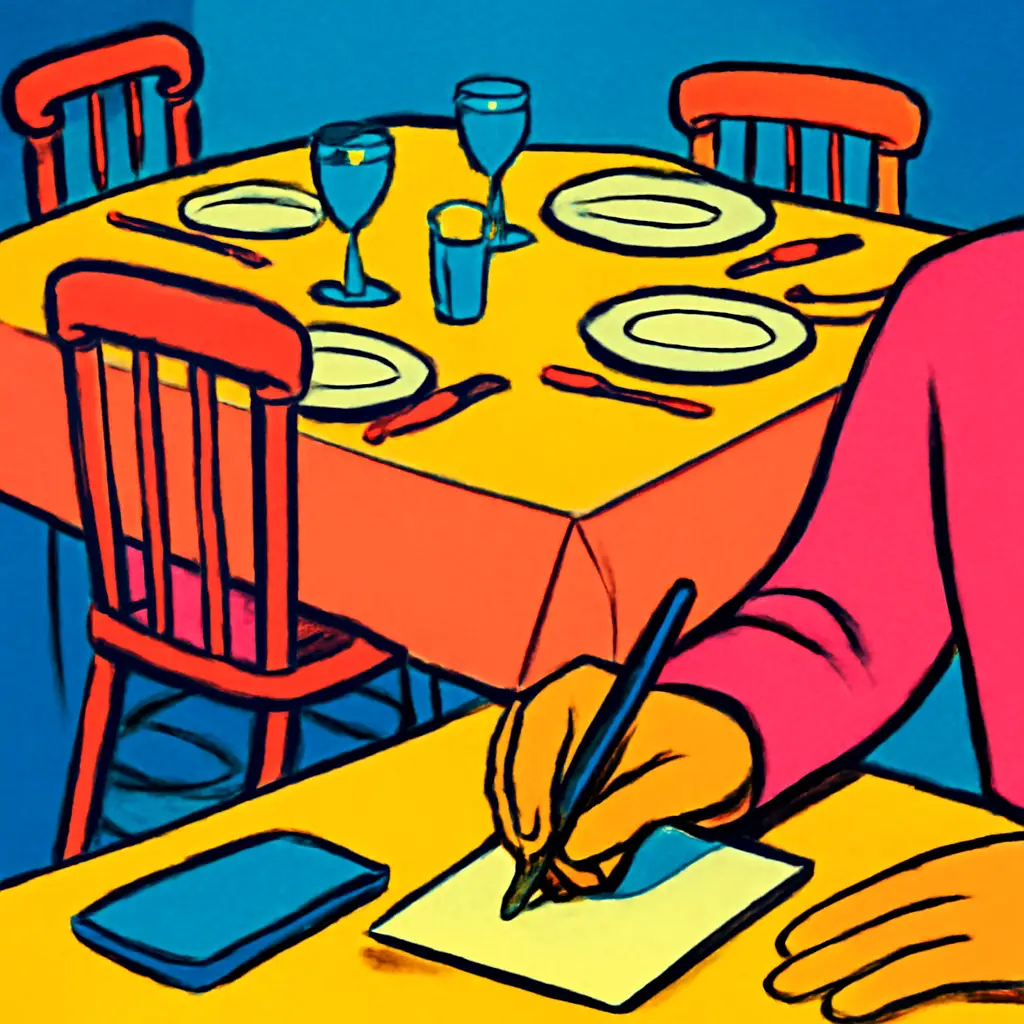
- Give the image a final caption. The group can choose a funny, affectionate, or descriptive caption. Write it in a notes app or on an index card if you want a small keepsake.
Then move on. The time limit matters. One wonderful story can consume an evening, but the rhythm of several photos lets more people participate.
Prompts that invite rather than interrogate
- What object in this photo would be hardest to explain to someone today?
- What do you think the photographer was trying to capture?
- Who looks most prepared, and who looks least prepared?
- What detail would disappear if this picture were taken now?
- What question would you ask someone standing just outside the frame?
- What title would this photo have in a very serious art museum?
Use the sillier prompts after the group has warmed up. Start with concrete details, since those help shy guests enter the conversation without having to perform.
Give different generations different ways in
Mixed-age groups can be great at this game when knowledge is treated as one kind of contribution, not the only kind. An older guest may identify people and places. A younger guest may spot a forgotten technology, invent a sharp caption, or ask the question that unlocks a story.
If children are playing, keep the rules simple: each person gets one turn to point out a detail before anyone gives the backstory. If a child is too young to wait, hand them a harmless job, such as choosing the next photo or placing a star sticker beside a favorite image.
For guests who did not grow up with the family, avoid making them feel like an audience for private references. Ask prompts that work without prior knowledge: “What makes this feel like a celebration?” or “Which person would you want on your team?” A newcomer can often bring fresh attention to a photo everyone else has stopped seeing.
Prevent the common ways it stalls
Do not begin with the oldest photo
The earliest or most historically significant picture is not necessarily the best opener. Start with an image that has immediate visual energy: several faces, a familiar setting, a funny object, or a clear occasion. Save fragile, obscure, or emotionally loaded images for later, if you use them at all.
Do not make correction the main event
When someone disputes a detail, use a neutral bridge: “We may have two versions of that story, which is useful to know.” If the precise answer matters, add a question mark to your note and move forward. The game does not need a verdict.
Do not hand over an unfiltered device
A full camera roll can expose messages, recent pictures, notifications, or images you did not mean to share. Use a separate album, turn off notifications, and have the next photo ready. For a printed version, check the backs of prints for notes you may not want read aloud.
Do not force a personal memory
“Tell us what you remember” can feel demanding, particularly when a photo involves childhood, grief, estrangement, or a time someone would rather not revisit. Better wording is, “Does anyone want to add context?” Silence is an acceptable answer.
Add a tiny layer of structure if your group likes games
You do not need points, but a light challenge can help a group that enjoys a little competition. Give each photo one “clue card” question: identify the season, guess the occasion, spot the oldest-looking object, or predict what happened next. Everyone writes a guess before the story is revealed.
Keep the scoring playful. A correct answer can earn the privilege of selecting the next prompt rather than a prize. That avoids the awkward result of turning family knowledge into a contest that one person is guaranteed to win.
For an illustrative example, a group of six might use 15 photos. At roughly two minutes per photo, that is about 30 minutes, plus five minutes to introduce the rules and five to ten minutes for stories that naturally run longer. Stopping while people still want one more photo is better than exhausting the folder.
End by preserving only what is worth keeping
At the end, ask each person to name one image they would save from the set and one caption or story they want remembered. Write down only the details people agree to keep. A brief note such as “Grandma’s red kitchen; everyone remembered the cinnamon rolls” is more useful than trying to transcribe every conversation.
If someone corrects a date later, update it. If two people remember an event differently, you can record both versions without deciding that one person has failed. Family archives are often incomplete; that does not make the evening incomplete.
Your next move
Choose just six photos tonight: two recognizable, two mysterious, and two amusing. Put them in a separate album, write three prompts on a scrap of paper, and plan a 20-minute round after the next meal or gathering. A small first version will show you which kinds of images make your people light up.






Ad