

You finally have an evening with friends, but nobody has the energy for a noisy game or the commitment for a movie. Someone suggests a book club, and the idea immediately acquires homework: choosing one title, getting hold of it, reading on time, and having something intelligent to say about it. A bring-your-own-book reading night solves the real problem. Everyone arrives with whatever they already want to read, spends a protected stretch of time doing it, and still gets the pleasant feeling of being together.
The trick is not simply inviting people to read in the same room. A successful reading night has a clear rhythm: enough welcome time to feel social, enough quiet to make actual progress, and a gentle ending that lets guests share without being put on the spot. Here is how to build that rhythm.
Set the expectation: this is a reading gathering, not a seminar
Give the event a name that explains the deal. “Quiet Reading Hour,” “Bring Your Current Book,” or “Read Together, Talk Later” is more useful than “book club.” In the invitation, say plainly that there is no assigned book and no expectation to finish anything.
That wording matters because people often avoid reading events for opposite reasons. One person worries they have not read enough; another worries a lively conversation will prevent them from reading at all. Name both protections.
Include the practical details guests need:
- Bring any reading material: a novel, comic, cookbook, magazine, e-reader, or audiobook with headphones.
- Plan for one quiet reading block, usually 30 to 60 minutes.
- Conversation is welcome before and after the reading block, not during it.
- Sharing at the end is optional and can be as small as naming what you read.
“Any reading material” is not a throwaway courtesy. It prevents the gathering from becoming a performance of taste. A person halfway through a mystery, a parent reading a practical guide, and someone paging through an art book can all participate equally.
A reading night works when the social contract is modest: show up with something that interests you, make room for other people’s attention, and leave without having to prove that your reading was worthwhile.
Choose a format that fits the room and the people
The ideal length is shorter than a traditional dinner party and more structured than an open-ended hangout. For a first gathering, plan about two hours. That gives the evening a destination without making it feel like an obligation.
A dependable two-hour rhythm
- First 25 minutes: arrive and settle. Offer a drink, let people find a seat, and allow ordinary catching up. This is also the best time for crunchy snacks and kettle-boiling.
- Next 5 minutes: reset the room. Briefly explain when the quiet block begins, where guests can get water, and whether phone notifications should be silenced.
- Next 45 minutes: read. Use a visible timer, a kitchen timer with a gentle sound, or simply announce the start and end.
- Next 30 minutes: return to conversation. Put out a simple snack, stretch, and offer optional prompts.
- Final 15 minutes: an easy close. Let people linger briefly, but signal that the planned event is ending.
If your group is easily distracted, use two 25-minute reading blocks with a five-minute stretch between them. If guests are already close friends and comfortable with quiet, a single 60-minute block may be more satisfying. The point is to choose the structure in advance, rather than hoping silence will happen naturally.
Make quiet feel intentional rather than awkward
Most people can tolerate silence; what feels uncomfortable is not knowing whether silence is expected. Give the quiet portion a visible beginning. You might say, “I’ll set the timer for 45 minutes. Feel free to refill your drink quietly, but let’s save conversation for afterward.” Then begin reading yourself.
The host sets the temperature of the room. If you continue tidying, answer messages, or repeatedly check on guests, the room feels provisional. Sit down with your own book. Your participation tells everyone that they are not being watched and that the plan is real.
A few small choices help concentration without turning your home into a library:
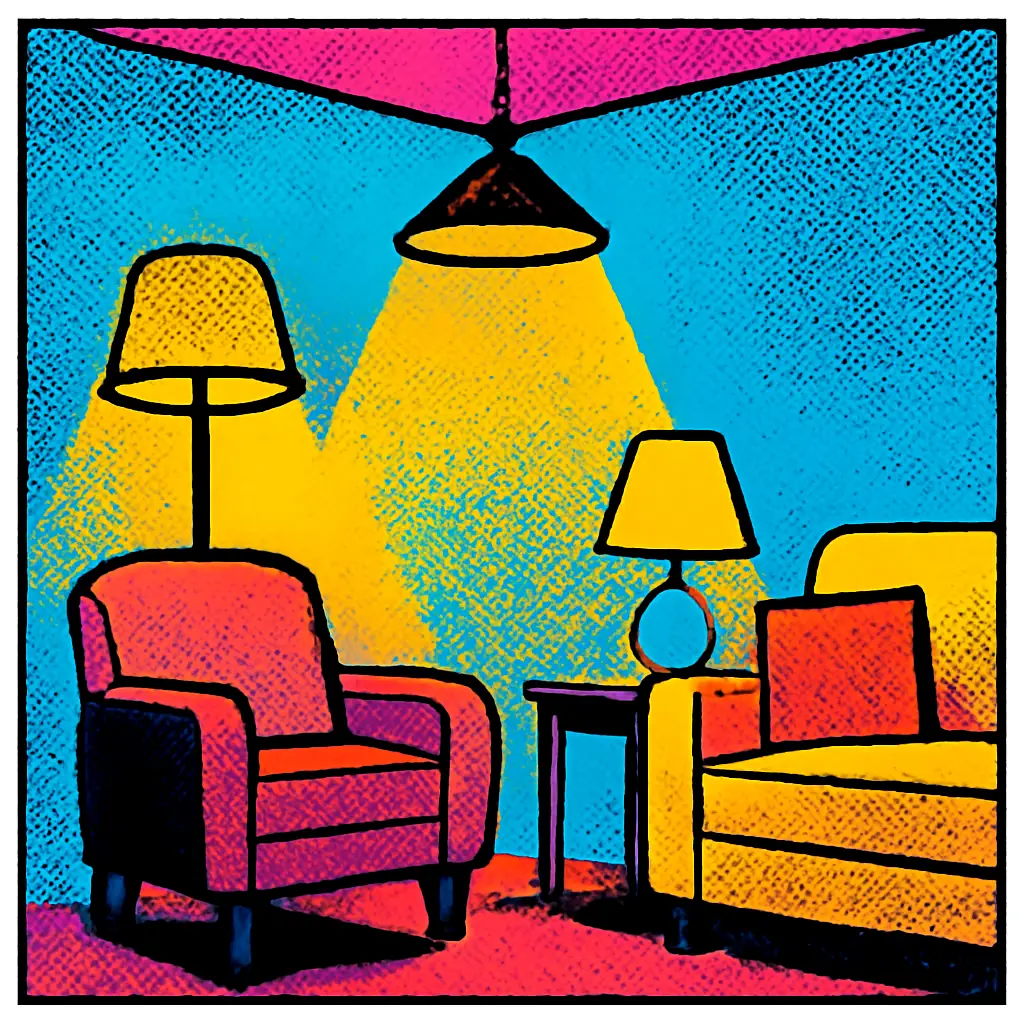
- Use comfortable light that reaches chairs and couches, not only a dim overhead lamp.
- Offer a few seating options, especially if people may be reading hardcovers or using e-readers.
- Keep the background quiet. Instrumental music can work for some groups, but silence is the safer default unless everyone agrees otherwise.
- Put noisy food away until the reading block ends. Popcorn, crinkly wrappers, and ice cubes can become surprisingly prominent in a quiet room.
- Let people move. A guest who needs to stand, make tea, or switch seats does not need an apology.
Do not overcorrect into strictness. This is not an exam hall. Someone laughing softly at a comic or asking to borrow a bookmark is normal. The useful boundary is against starting a conversational thread that pulls several people out of their books.
Offer snacks that support the purpose
Food should be easy to pick up and easy to ignore. A full meal makes the gathering about hosting logistics; elaborate grazing boards invite guests to hover and chat through the time intended for reading. You are aiming for “pleasantly cared for,” not “restaurant service.”
Good choices are drinks, fruit, cookies, small sandwiches, or a simple cake served after the quiet block. If you want guests to bring something, ask them to bring a drink or one shareable item only if that feels natural for your group. Never make food contribution the price of entry.
Consider hands, too. Greasy snacks and fragile library books are a poor combination. Napkins, a side table for cups, and a place to wash hands remove minor annoyances that otherwise interrupt reading.
Use end-of-night prompts that invite, not interrogate
The discussion after reading is where a book club can sneak back in. Avoid questions that sound like school, such as “What did you think of the author’s message?” Guests may have read three pages, reached a sad scene, or simply not want to analyze their book.
Instead, offer prompts that work regardless of what, or how much, a person read:
- What did you bring tonight?
- What made you pick it up in the first place?
- What is one detail you noticed—a sentence, image, recipe, character, or fact?
- Was this a good book for your mood tonight?
- What would you like to read next time: more of this, or something completely different?
Make every prompt opt-in. It is perfectly fine if the conversation shifts to someone’s new plant, a television recommendation, or the snack recipe. The reading block is the event’s shared activity; the conversation afterward does not have to justify it.
Handle the common friction points before they become annoying
Someone arrives without a book
Keep a small “rescue shelf” of magazines, short story collections, comics, cookbooks, or books you are happy to lend. Do not announce it as a test someone failed. Just say, “There are a few things on the table if you want one.” A phone or e-reader also counts.
Someone wants to talk during the reading block
Answer briefly and warmly, then point to the next opening: “I want to hear that when the timer goes off.” If the question is practical, handle it quietly. The goal is to protect the group without embarrassing a guest who may have forgotten the format.
People read at very different speeds
That is the advantage of independent books. Nobody needs to keep up. Discourage page-count comparisons, and do not ask everyone to report what they accomplished. Reading slowly, rereading, or staring thoughtfully out a window are all valid uses of the time.
One guest seems unable to settle
Not every format suits every evening. They may prefer to color, knit, do a crossword, or listen to an audiobook through headphones. If that activity is quiet and does not demand conversation, it can fit the spirit of the gathering. If your event is specifically about reading, say so gently in the invitation rather than correcting people at the door.
Keep the host’s workload deliberately small
The most sustainable reading night is repeatable. Do not redecorate, create themed favors, or feel obliged to curate a monthly title. Those extras turn a low-pressure ritual into another task people abandon.
A simple recurring pattern is enough: same general day of the month, same rough duration, and an invitation sent a week or two beforehand. Attendance can vary. Four people make a lovely reading room; so do two. If only one friend comes, you have still made time for an unusually calm visit.
For an occasional variation, choose a loose reading texture rather than a required theme. “Short things night” might suit essays, poems, comics, and articles. “Rainy-day reading” can mean anything comforting. These themes give people an easy starting point while preserving the central freedom to bring what they want.
A realistic first-night plan
Imagine six friends gathering from 7:00 to 9:00 p.m. At 7:25, after everyone has had a chance to settle, the host says that the 40-minute reading block will start at 7:30. Phones go face-down or into bags, tea is poured, and each person reads something different. At 8:10, the timer ends. People refill drinks, eat cookies, and gradually mention what held their attention. One guest read only a few pages because they were tired; another finished a magazine feature; another found a recipe to make later. None of those outcomes needs fixing. At 8:50, the host begins clearing cups and says they are glad everyone came. The evening ends while it still feels restful.
That is the quiet power of the format: it creates a reason to protect leisure without requiring everyone to have the same taste, pace, or energy.
Try the smallest version this week
Text one or two people: “Would you like to come over for tea and 40 minutes of quiet reading on Thursday? Bring whatever you’re in the middle of. No book-club discussion.” Pick a start and end time, choose one uncomplicated snack, and put your own book by the door now. The structure can grow later; the first goal is simply to make an ordinary evening feel shared and spacious.








Ad